Anthropic Claude Opus 4.7: A Deep Dive & VC Funding Trends
Explore Anthropic's Claude Opus 4.7, its capabilities, and the latest trends in venture capital funding. Understand the implications for AI and investment.
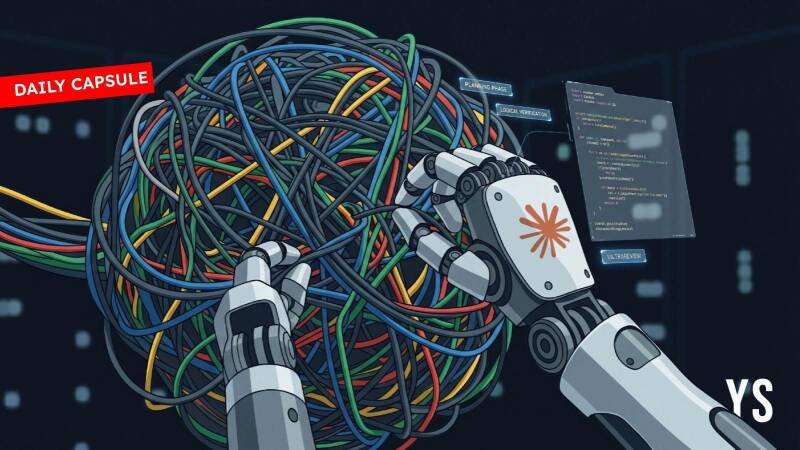



Explore Anthropic's Claude Opus 4.7, its capabilities, and the latest trends in venture capital funding. Understand the implications for AI and investment.
The world of Artificial Intelligence (AI) is constantly evolving, and Anthropic is a key player driving that evolution. Recently, Anthropic has been making waves with its Claude family of Large Language Models (LLMs). Their top-tier offering, Claude Opus 4.7, is now generally available, offering impressive capabilities for a wide range of applications.
Within Anthropic's Claude ecosystem, Opus 4.7 sits at the very top. Think of it like this: Opus is the premium, high-performance option. Below it are the Sonnet and Haiku models, which offer different balances of speed, cost, and performance. Essentially, Opus 4.7 is designed for users who need the absolute best performance, regardless of the computational cost. It's meant for complex tasks that demand a high level of reasoning, creativity, and accuracy.
While specific technical details of Opus 4.7's architecture haven't been publicly disclosed, we can infer that it boasts a significant increase in parameters, training data, and optimization compared to its predecessors. This translates to improved performance across various benchmarks, making it a powerful tool for applications like:
In our opinion, Opus 4.7 represents a significant step forward in the capabilities of LLMs, demonstrating the impressive progress being made in AI research and development.
The release of Claude Opus 4.7 is important for several reasons. First, it pushes the boundaries of what's possible with AI, demonstrating the potential for LLMs to tackle increasingly complex tasks. This has implications for businesses, researchers, and individuals who can leverage these advanced capabilities to improve efficiency, productivity, and innovation.
Second, the availability of Opus 4.7 highlights the growing competition in the AI space. Companies like Anthropic are constantly striving to develop more powerful and capable models, which drives innovation and ultimately benefits consumers. Increased competition could drive costs down, making AI more accessible to a wider range of users.
Finally, the news surrounding Claude Opus 4.7 occurs against a backdrop of shifting investment trends. Reports indicate a significant decline in venture capital funding across the board, including within the AI sector. This could impact the pace of innovation and the ability of startups to compete with larger, more established players.
The introduction of Claude Opus 4.7 confirms that AI development is still accelerating. Anthropic's dedication to producing high-performing models speaks to the increasing need for strong performance in AI solutions. However, the reported downturn in VC funding presents a conflicting picture. While the need for powerful AI remains strong, investors may be becoming more cautious, scrutinizing business models and ROI more rigorously.
This could lead to a consolidation within the AI industry, with well-funded companies like Anthropic potentially acquiring smaller players or partnering to leverage their expertise. We believe that companies with strong fundamentals, clear value propositions, and sustainable business models will be the ones that weather the storm. The hype surrounding AI is now being replaced by a focus on practical applications and demonstrable results.
Looking ahead, we expect to see continued advancements in LLMs, with models becoming even more powerful, efficient, and specialized. The integration of AI into various industries will likely accelerate, transforming how businesses operate and individuals live their lives.
However, the future of AI development will also depend on the availability of funding. If the decline in VC funding persists, it could slow down the pace of innovation and make it more difficult for startups to compete. It's crucial for policymakers and investors to create an environment that supports sustainable growth in the AI sector.
In our opinion, the success of Claude Opus 4.7 and similar advancements will ultimately hinge on addressing the challenges of responsible AI development, including issues like bias, fairness, and transparency. As AI becomes more integrated into our lives, it's essential to ensure that these technologies are used ethically and for the benefit of all.