US Redistricting War: Democrats Close the Gap, Shaping Future Elections
The battle over US congressional redistricting is far from over. We break down the state-by-state fight, Democratic gains, and what it means for the future of American politics.
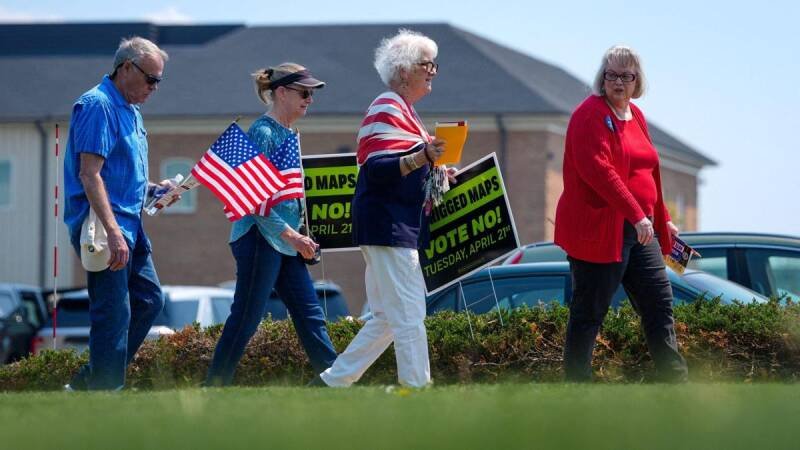



The battle over US congressional redistricting is far from over. We break down the state-by-state fight, Democratic gains, and what it means for the future of American politics.
The once-a-decade process of redrawing congressional districts, known as redistricting, is a high-stakes political battle that shapes the landscape of American elections. Following the 2020 census, states across the country have been engaged in this process, leading to intense partisan clashes. Initially, it appeared Republicans held a significant advantage, but Democratic-led states have strategically narrowed the gap, making the fight for control of Congress even more competitive.
Redistricting is the process of redrawing the boundaries of electoral districts, typically conducted every 10 years following the US Census. This ensures that each district has roughly the same population, maintaining the principle of "one person, one vote." However, the process is often highly politicized, with both Democrats and Republicans attempting to draw maps that favor their party. This practice is known as gerrymandering.
Going into this redistricting cycle, Republicans controlled more state legislatures and governorships, giving them significant control over the map-drawing process in key states. Many experts predicted a substantial Republican advantage, potentially allowing them to gain seats in the House of Representatives even without winning the popular vote. However, this advantage hasn't fully materialized.
Democratic-led states, particularly those with independent commissions or judicial oversight, implemented fairer or more aggressively pro-Democratic maps. In some cases, courts stepped in to strike down Republican-drawn maps deemed to be unconstitutionally gerrymandered. This has helped Democrats to offset some of the Republican gains elsewhere. Some states opted to be less partisan and tried to draw maps that would encourage competition, or favor existing representatives.
The outcome of the redistricting process has profound implications for the balance of power in the US Congress. The maps drawn now will determine the competitiveness of elections for the next decade. This could impact which party controls the House of Representatives and influence the passage of legislation on crucial issues like healthcare, climate change, and economic policy. Changes in district lines can also have a dramatic impact on individual voters. It could mean that their district representative is significantly more, or less aligned with their views.
In our opinion, the redistricting battle highlights the deep partisan divisions in American politics. The fight over fair representation is essential to democracy. While Republicans initially seemed poised for significant gains, the Democratic response in key states has leveled the playing field somewhat. The role of independent commissions and judicial oversight has proven crucial in preventing extreme gerrymandering and promoting more competitive elections. It's clear that redistricting continues to be one of the most important battles for control over the government.
The impact of redistricting varies significantly from state to state. In some states, the maps are already finalized, while in others, legal challenges are ongoing. Keep an eye on states like North Carolina, Ohio, and Georgia, where redistricting has been particularly contentious. These states are also key battlegrounds for presidential elections. The resulting maps will play a vital role in deciding who goes to Congress to represent the people in each state.
The redistricting fight is far from over. Ongoing legal challenges and potential changes in state laws could still alter the final maps. This could impact elections in 2024 and beyond. Furthermore, the debate over redistricting will likely continue to fuel calls for broader reforms, such as the establishment of independent redistricting commissions nationwide. In our opinion, continued court challenges are expected, so we expect more change. This is a complex and ongoing issue. It's crucial for citizens to stay informed and engaged in the process to ensure fair and representative elections.
























