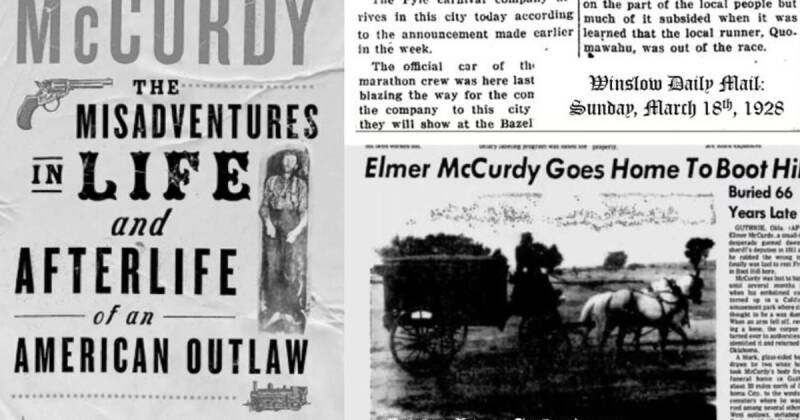
Elmer McCurdy and the Forgotten 1928 Transcontinental Footrace: A Tale of Two Eras
Explore the fascinating link between dead outlaw Elmer McCurdy and the 1928 Transcontinental Footrace, a forgotten piece of American history. We analyze the impact and future implications.
Elmer McCurdy and the Forgotten 1928 Transcontinental Footrace: A Tale of Two Eras
The story of Elmer McCurdy, an inept outlaw whose mummified body became a sideshow attraction, might seem entirely disconnected from the world of endurance sports. However, author Neil Weintraub has unearthed a surprising connection: the 1928 Transcontinental Footrace, an ultramarathon of epic proportions that stretched across the United States. This race, largely forgotten today, offers a compelling window into American culture during the Roaring Twenties and the looming shadow of the Great Depression.
Who Was Elmer McCurdy?
Elmer McCurdy was, to put it bluntly, a rather unsuccessful criminal. In 1911, he attempted to rob a train, but mistakenly targeted a passenger train instead of one carrying a substantial payroll. He made off with a paltry $46 and two jugs of whiskey. Shortly after, he was killed in a shootout with law enforcement. What happened next is where his story takes a bizarre turn. His body was embalmed, unclaimed, and eventually ended up as a traveling sideshow attraction, labeled as a "dead outlaw." For years, people paid to see "The Bandit Who Wouldn't Give Up," unknowingly gawking at the remains of Elmer McCurdy.
The 1928 Transcontinental Footrace: An American Spectacle
Imagine running from Los Angeles to New York City, on foot. That's precisely what the participants in the 1928 Transcontinental Footrace attempted. Organized by C.C. Pyle, a flamboyant promoter known for his barnstorming tactics, the race drew hundreds of runners hoping to win a hefty prize and instant fame. The race was incredibly grueling. Runners faced harsh weather conditions, poor roads, and the constant threat of injury. They were often subjected to grueling daily mileage requirements, and the competition was fierce. The public, captivated by the sheer audacity of the event, followed the race with keen interest. It was a testament to human endurance and the spirit of competition.
Why This News Matters
This story matters because it illuminates two seemingly disparate aspects of American history. It shows how the era of sensationalism, as embodied by McCurdy's post-mortem career, intersected with the rise of mass entertainment and the fascination with extreme physical feats. The footrace, while largely forgotten, represented a grand ambition and a desire for spectacle characteristic of the 1920s. By linking these narratives, Weintraub provides a richer understanding of the period.
Our Analysis
In our opinion, the most fascinating aspect of this connection is the contrast it highlights. McCurdy's story represents the dark side of the American Dream – a failure to achieve notoriety through legitimate means, ultimately ending in exploitation. The footrace, on the other hand, embodies the striving and ambition that define the American spirit. It was a showcase of grit, determination, and the pursuit of excellence, even amidst incredible hardship. Both narratives, however, speak to the power of storytelling and the public's enduring fascination with the extraordinary, whether it's a dead outlaw or a superhuman athlete.
The Race as a Reflection of the Times
The timing of the race is significant. It occurred just before the stock market crash of 1929, as the Roaring Twenties were coming to a close. The race's extravagance and focus on individual achievement stood in stark contrast to the economic hardship that would soon grip the nation. The runners sought fortune, fame, and a better life, mirroring the aspirations of many Americans at the time. This historical context deepens our understanding of the race and its meaning.
Future Outlook
While the 1928 Transcontinental Footrace may not be a household name, its legacy lives on in the world of ultramarathoning. Modern endurance races owe a debt to these early pioneers who pushed the boundaries of human physical capability. This story could also spur renewed interest in researching and documenting other forgotten chapters in sports history. As we delve deeper into these narratives, we gain a more complete picture of our past and a greater appreciation for the human spirit's ability to endure and overcome.
Rediscovering Forgotten Stories
We believe this rediscovery is crucial. Understanding these seemingly unrelated events helps us understand the complexities of the past. It enriches our understanding of the human condition and inspires us to learn from our history. This could impact how we think about modern athletic events and the stories behind them.