Mexico's President Sheinbaum Responds to Trump on Migrant Deaths: What It Means
Mexico's President Claudia Sheinbaum confronts Trump over migrant deaths and Cuba policy. Understand the implications for US-Mexico relations and immigration.
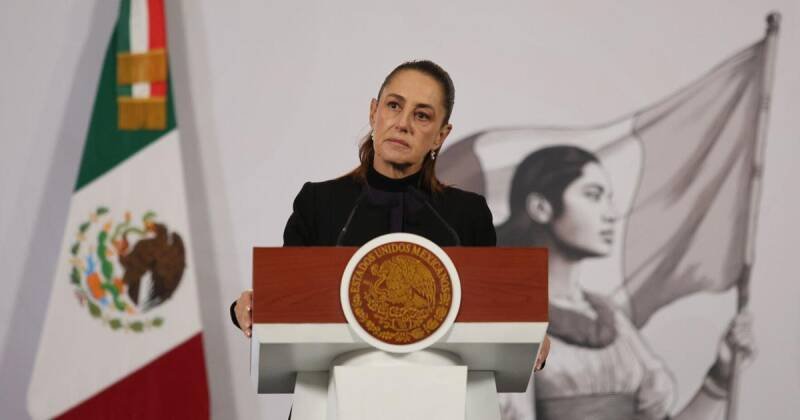



Mexico's President Claudia Sheinbaum confronts Trump over migrant deaths and Cuba policy. Understand the implications for US-Mexico relations and immigration.
Newly elected Mexican President Claudia Sheinbaum is taking a firm stance against former U.S. President Donald Trump's policies, particularly regarding the treatment of Mexican migrants and U.S. policy toward Cuba. The Mexican government lodged a formal protest on Tuesday concerning the deaths of Mexican citizens while in U.S. immigration custody. This marks a clear departure from potentially more conciliatory approaches and signals a period of potentially strained, but perhaps more direct, dialogue between the two nations.
The heart of the matter is the well-being and safety of Mexican nationals seeking opportunity in the United States. The Mexican government is asserting its responsibility to protect its citizens, even when they are within the jurisdiction of another country. The details surrounding these deaths in U.S. custody have not been fully publicized, and the Mexican government is likely demanding transparency and accountability from U.S. authorities.
Beyond the issue of immigration, Sheinbaum's administration is also signaling a divergence from Trump's policies regarding Cuba. While the specific nature of this pushback wasn't detailed in the initial report, it likely relates to Trump's tightening of the U.S. embargo against Cuba, reversing much of the progress made during the Obama administration. Mexico has traditionally maintained closer ties with Cuba than the U.S. and may seek to foster continued economic and diplomatic relations, despite U.S. objections. This could involve increased trade, cultural exchange, or diplomatic support for Cuba on the international stage.
This development has significant implications for U.S.-Mexico relations. The tone and policies of the Mexican presidency directly impact a range of issues, from trade and security to immigration and drug trafficking. A less cooperative relationship could complicate efforts to address shared challenges and lead to increased tensions along the border. Conversely, a relationship built on clear communication and mutual respect, even when disagreements exist, could pave the way for more effective cooperation.
Moreover, this signals a potential shift in Mexico's foreign policy. For years, Mexico has often walked a tightrope, balancing its economic dependence on the U.S. with its desire to maintain an independent foreign policy. Sheinbaum's stance suggests a greater willingness to assert Mexico's interests, even when they clash with those of its northern neighbor.
In our opinion, Sheinbaum's strong initial stance is a calculated move. She is likely aiming to establish credibility with her base and demonstrate her commitment to defending Mexican interests. This doesn't necessarily preclude future cooperation with the U.S., but it sets a clear boundary and signals that Mexico will not be a passive partner.
The timing of this pushback is also noteworthy. As Trump continues to be a prominent figure in American politics, and potentially a candidate again, Sheinbaum's early challenge could be interpreted as an attempt to influence the future direction of U.S.-Mexico relations, irrespective of who occupies the White House. It sends a clear message: Mexico will advocate for its citizens and its values.
The next few months will be crucial in determining the trajectory of U.S.-Mexico relations under Sheinbaum's leadership. We expect continued dialogue and negotiation on key issues like immigration and trade. However, we also anticipate a greater willingness from Mexico to challenge U.S. policies and pursue its own interests on the world stage.
This could impact trade negotiations, security cooperation along the border, and the overall tone of diplomatic relations. We will be closely monitoring these developments to provide ongoing analysis and insights.
Ultimately, the success of the U.S.-Mexico relationship will depend on the ability of both countries to find common ground and address shared challenges in a spirit of mutual respect and understanding. It remains to be seen if that will be possible, given the current political landscape.