China Smartphone Market Dips: Rising Costs Impact Sales in Q1 2026
New Omdia report reveals a slight decline in China's smartphone shipments in Q1 2026 due to rising component costs and price hikes. Find out the leading vendors and future outlook.



New Omdia report reveals a slight decline in China's smartphone shipments in Q1 2026 due to rising component costs and price hikes. Find out the leading vendors and future outlook.
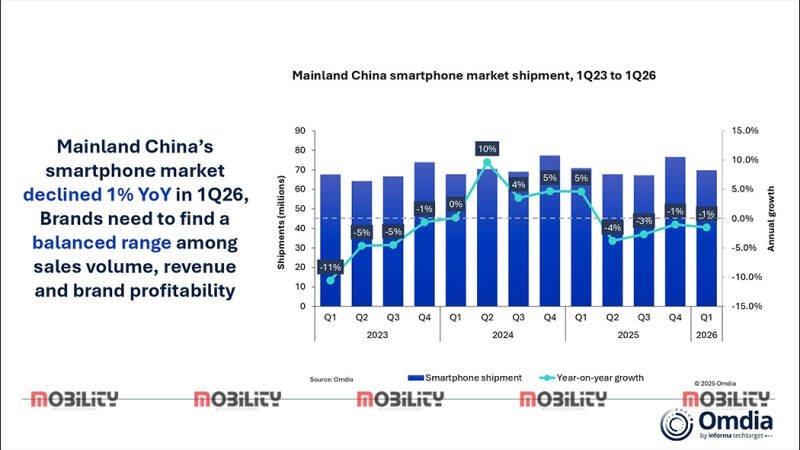
According to a new report from Omdia, the Chinese smartphone market experienced a slight downturn in the first quarter of 2026. Shipments totaled 69.8 million units, a 1% decrease compared to the same period last year. This dip, while not dramatic, signals ongoing challenges for the world's largest smartphone market.
The primary driver behind this decline appears to be rising component costs, particularly for memory. These increased costs have forced major smartphone vendors to raise prices, making devices less accessible to price-sensitive consumers. This price hike ultimately put downward pressure on overall sales volume.
Despite the overall market contraction, Huawei managed to maintain its leading position, shipping 13.9 million units in Q1 2026. While the report doesn't detail other vendors' performance, Huawei's leadership indicates a degree of resilience amidst market headwinds.
The Chinese smartphone market is a bellwether for the global mobile industry. Its size and influence mean that trends observed there often ripple outwards. A slowdown in China can have significant implications for component manufacturers, device vendors, and the broader tech ecosystem. This news highlights the delicate balance between innovation, production costs, and consumer affordability in the smartphone sector.
In our opinion, the 1% decline in shipments, while seemingly small, reveals a crucial tension: the industry's reliance on increasingly expensive components is starting to impact consumer behavior. While innovation often demands advanced (and pricier) hardware, manufacturers must find ways to mitigate these costs or risk alienating a significant portion of the market.
Furthermore, Huawei's continued market leadership despite geopolitical pressures and supply chain challenges is noteworthy. It suggests a strong brand loyalty and effective strategies for navigating a complex environment. This could impact other vendors, particularly those reliant on specific components or markets.
The future of the Chinese smartphone market will likely depend on several factors:
We believe that manufacturers need to focus on optimizing their supply chains, exploring alternative component sources, and developing more cost-effective technologies. In the long term, strategic partnerships and a focus on value-driven offerings will be crucial for success in the Chinese smartphone market.
A continued rise in component costs could lead to further shipment declines in subsequent quarters. Conversely, a stabilization of prices and successful cost management strategies could help the market rebound. The introduction of new, competitively priced devices could also stimulate demand.
Ultimately, the Chinese smartphone market remains a dynamic and competitive landscape. While the Q1 2026 results indicate challenges, they also present opportunities for innovation and strategic adaptation.