Trump's Economic Record: Fact vs. Fiction Ahead of the Election
Exploring Trump's economic accomplishments, the Democrat's criticisms, and what it all means for the upcoming election. A balanced analysis with context and future outlook.



Exploring Trump's economic accomplishments, the Democrat's criticisms, and what it all means for the upcoming election. A balanced analysis with context and future outlook.
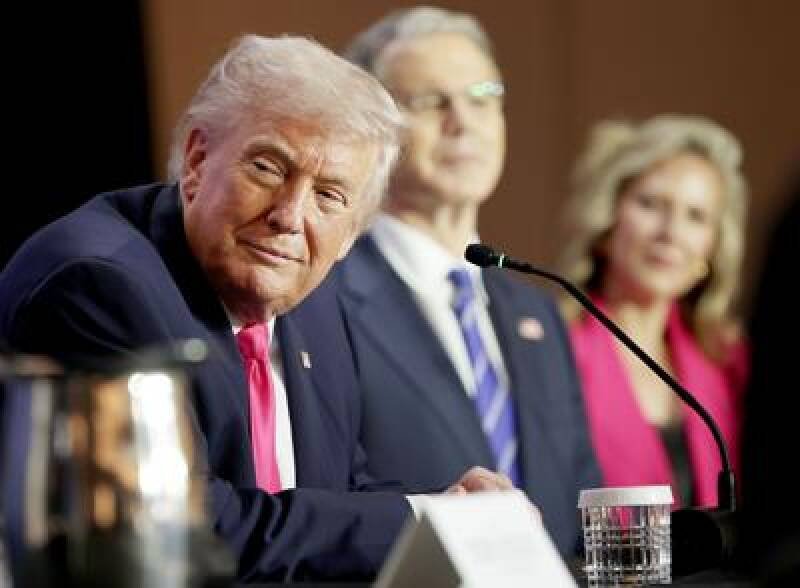
Former President Donald Trump recently visited Las Vegas to promote his "no-taxes-on-tips" proposal from last year. This move underscores the White House's strategy to emphasize perceived economic successes during his administration. However, Democrats are fiercely challenging these claims as the election approaches, painting a different picture of the economy under Trump's leadership.
Trump and his supporters often point to metrics like pre-pandemic job growth, low unemployment rates, and stock market performance as evidence of a thriving economy. They emphasize tax cuts implemented during his tenure as a key driver of economic activity, benefiting both businesses and individuals. The "no-taxes-on-tips" proposal, for example, is presented as a direct benefit to working-class individuals, a demographic Trump aims to galvanize.
Democrats argue that Trump's economic policies disproportionately favored the wealthy and corporations, leading to increased income inequality. They criticize the tax cuts for adding to the national debt without generating sustainable economic growth. Furthermore, they often highlight that much of the economic growth under Trump was a continuation of trends that began during the Obama administration. Democrats also emphasize the economic fallout from the COVID-19 pandemic, which occurred towards the end of Trump's term, leading to significant job losses and economic disruption.
Understanding the nuances of Trump's economic record is crucial for voters. The economy is consistently a top concern for Americans, and perceptions of past performance often influence voting decisions. A clear and balanced understanding of what actually happened during Trump's time in office, separated from partisan rhetoric, is essential for making informed choices in the upcoming election. This impacts every American's financial well-being, from job opportunities to the cost of living.
In our opinion, both sides present selective interpretations of the data. While it's true that the economy experienced periods of growth under Trump, it's also important to acknowledge the pre-existing trends and the impact of external factors, such as global economic conditions and, of course, the COVID-19 pandemic. The tax cuts likely did stimulate some economic activity in the short term, but the long-term consequences for the national debt remain a concern. The claim that these policies disproportionately favored the wealthy is supported by numerous studies analyzing their impact on income distribution.
It's also vital to remember that economic performance is not solely determined by presidential policies. Factors like technological innovation, global trade, and consumer confidence all play significant roles. Attributing all successes or failures to a single administration is a simplification of a complex reality.
The debate over Trump's economic record will undoubtedly continue throughout the election cycle. Expect to see both sides doubling down on their respective narratives, using carefully selected data points to support their arguments. This could impact voter perception and ultimately influence the outcome of the election.
Looking ahead, the focus will likely shift to future economic policies. Candidates will need to articulate clear plans for addressing issues such as inflation, job creation, and income inequality. The effectiveness of these plans will depend on various factors, including global economic conditions, technological advancements, and the political climate.
In our opinion, the future of the US economy will hinge on policies that promote sustainable growth, address income inequality, and prepare the workforce for the challenges and opportunities of the 21st century. A nuanced understanding of past economic performance is essential for informing these policies and building a more prosperous future for all Americans.