China's Robot Half-Marathon: A Leap for Humanoid Technology
China is pushing the boundaries of robotics with its second humanoid robot half-marathon, featuring tougher terrain and showcasing the nation's ambition to lead in AI and automation.
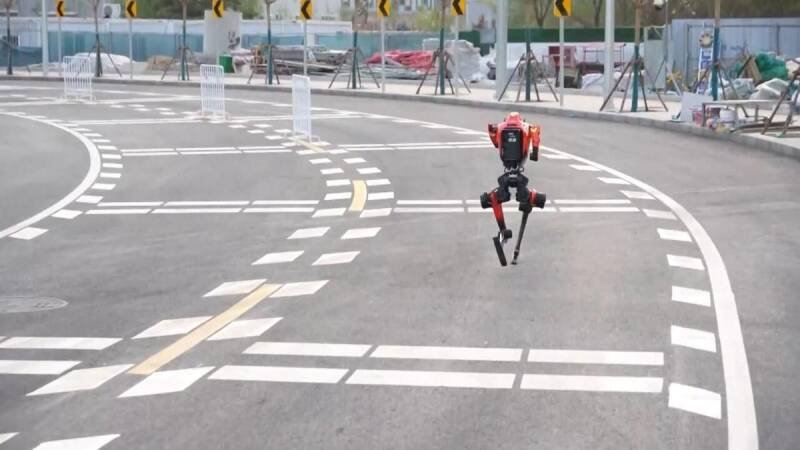



China is pushing the boundaries of robotics with its second humanoid robot half-marathon, featuring tougher terrain and showcasing the nation's ambition to lead in AI and automation.
China is doubling down on its commitment to robotics with its second annual humanoid robot half-marathon. This year's event, scheduled for Sunday, promises to be even more challenging than the last, with organizers introducing tougher terrain designed to push the limits of the participating robots.
More than 300 humanoid robots are expected to participate, showcasing advancements in areas like locomotion, balance, and endurance. This event isn't just a spectacle; it's a crucial proving ground for technologies China hopes will revolutionize industries across the board.
This robot half-marathon is significant for several reasons. First, it highlights China's ambition to become a global leader in robotics and artificial intelligence. The Chinese government is actively investing in these sectors, recognizing their potential to drive economic growth and enhance national competitiveness. Second, the event serves as a valuable platform for researchers and engineers to test and refine their designs in a real-world setting. Finally, it provides a glimpse into the future of work, where robots may play an increasingly important role in various tasks, including those that require physical dexterity and endurance.
In our opinion, China's focus on humanoid robots signals a long-term strategic vision. While other countries are also developing robots, China's sheer scale and centralized planning give it a unique advantage. The tougher terrain in this year's half-marathon is particularly noteworthy because it forces developers to address real-world challenges such as uneven surfaces and obstacles. This could significantly accelerate the development of more robust and adaptable robots.
This event will likely impact the global robotics landscape. China's advancements in humanoid robotics could spur innovation in other countries, leading to a more competitive global market. Companies and research institutions worldwide will be closely watching the performance of the robots in the half-marathon to identify areas where they can improve their own designs.
Looking ahead, we anticipate that China will continue to invest heavily in robotics and AI. We expect to see further improvements in the capabilities of humanoid robots, with potential applications in manufacturing, healthcare, logistics, and even elder care. The robot half-marathon is likely to become an annual event, growing in scale and sophistication over time. It will also be interesting to see how China addresses the ethical and societal implications of widespread robot adoption, such as job displacement and privacy concerns.
This year's half-marathon could reveal new breakthroughs in areas like battery technology, motor control, and sensor fusion. These advancements could have broader implications for other industries, such as electric vehicles and autonomous vehicles. In our opinion, the key to success for these robots will be their ability to adapt to unpredictable environments and make decisions autonomously.
Ultimately, China's robot half-marathon is more than just a race; it's a testament to the nation's ambition to lead the world in robotics and artificial intelligence. This is something that everyone in the technology world should be keeping an eye on.