Carney Urges Canada to Look Beyond US, Cites Global Uncertainty
Former Bank of Canada Governor Mark Carney advises Canada to diversify its partnerships beyond the US due to rising global tensions. Our analysis of the implications and future outlook.



Former Bank of Canada Governor Mark Carney advises Canada to diversify its partnerships beyond the US due to rising global tensions. Our analysis of the implications and future outlook.
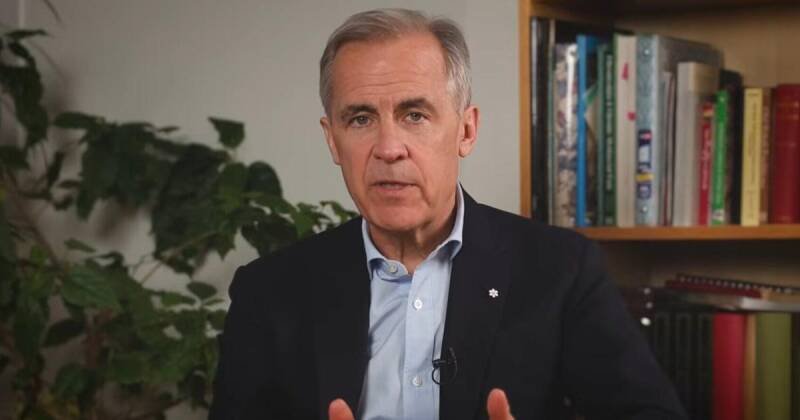
Mark Carney, former Governor of the Bank of Canada and the Bank of England, has urged Canada to broaden its international partnerships, signaling a potential shift away from over-reliance on the United States. In a recent address, Carney reiterated themes from his speech at the World Economic Forum in Davos, emphasizing the need for proactive strategies amidst increasing global instability.
He underscored that "hope isn't a plan" and "nostalgia isn't a strategy," implying that Canada cannot simply rely on past relationships or wishful thinking to navigate the complex global landscape. This message carries significant weight, especially considering Canada's historically strong economic and political ties with the U.S.
Carney’s message suggests that Canada needs to actively cultivate relationships with other nations and regions to ensure its economic security and international influence. This diversification strategy could involve strengthening trade agreements with countries in Asia, Europe, and South America, as well as deepening diplomatic ties.
His statements highlight a growing awareness of the potential risks associated with over-dependence on any single partner, particularly given the current geopolitical climate and the evolving nature of international trade.
This news is significant because it comes from a highly respected figure in global finance and economics. Mark Carney's opinions carry considerable influence, and his call for Canada to diversify its partnerships is likely to resonate with policymakers and business leaders. A shift in Canada’s foreign policy, even a subtle one, could have profound implications for its economy, security, and international standing.
Furthermore, the message reflects a broader trend of countries seeking to reduce their reliance on traditional allies and explore new opportunities in a multipolar world. This is driven by factors such as rising protectionism, geopolitical tensions, and the emergence of new economic powerhouses.
In our opinion, Carney's advice is both timely and prudent. While the U.S. remains a vital partner for Canada, over-reliance on a single nation can expose Canada to economic vulnerabilities and limit its strategic options. Diversifying partnerships can provide Canada with greater resilience and flexibility in the face of global challenges.
This could impact various sectors of the Canadian economy, from trade and investment to energy and technology. Businesses may need to re-evaluate their supply chains and explore new markets. The government may need to invest in infrastructure and diplomatic efforts to support diversification.
However, such a shift could also present challenges. Negotiating new trade agreements and building strong relationships with new partners requires time, resources, and political will. There may also be resistance from domestic industries that benefit from the status quo. Navigating these challenges will require careful planning and effective communication.
Looking ahead, we anticipate that Canada will gradually pursue a more diversified approach to its international relations. This will likely involve strengthening existing partnerships with countries in Europe and Asia, as well as exploring new opportunities in emerging markets. The speed and extent of this shift will depend on a variety of factors, including the political landscape in both Canada and the U.S., the state of the global economy, and the evolution of geopolitical tensions.
We believe that Canada is well-positioned to navigate this transition successfully. It has a strong economy, a stable political system, and a reputation for sound governance. By embracing strategic diversification, Canada can enhance its economic security, strengthen its international influence, and secure its future in an increasingly complex world. The ability to adapt and forge new alliances will be paramount in maintaining prosperity and stability in the years to come.
The message from Carney serves as a clear signal: Canada must be proactive and forward-thinking in its approach to international relations, recognizing that "hope isn't a plan" and "nostalgia isn't a strategy."