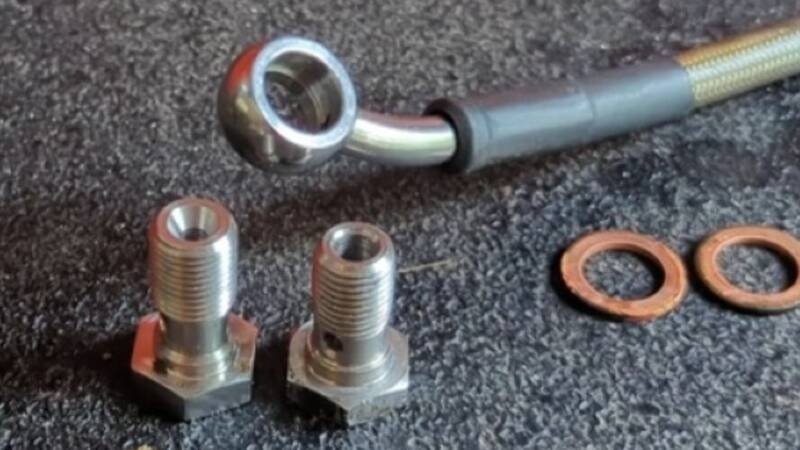
What are Banjo Bolts on a Motorcycle? Understanding Their Function
Ever wondered about those funny-named banjo bolts on your motorcycle? Learn what they are, how they work, and why they're essential for braking and hydraulic systems.
What Are Banjo Bolts on a Motorcycle? An Essential Guide
You might think a banjo bolt has something to do with making music, but on a motorcycle, it's a crucial component for a very different purpose. These seemingly simple bolts play a vital role in your bike's hydraulic systems, particularly the brakes. Let's dive in and understand what they are and why they matter.
What Exactly is a Banjo Bolt?
A banjo bolt isn't your standard bolt. It's a specially designed fastener with a hollow center and a small hole (or holes) drilled through its side. This unique design allows fluid to flow through the bolt and into an attached "banjo" fitting. The "banjo" fitting, usually a circular or donut-shaped piece, clamps around the bolt and provides a connection point for a hydraulic line. The name comes from a superficial resemblance of the fitting to the musical instrument, the banjo.
How Do Banjo Bolts Work?
The primary function of a banjo bolt is to connect a hydraulic line to a component like a brake caliper or master cylinder. Here's a breakdown of the process:
* **Fluid Passage:** The hollow center of the bolt allows brake fluid to pass through.
* **Sealing:** Copper or crush washers are placed on either side of the banjo fitting to create a tight, leak-proof seal.
* **Connection:** When the banjo bolt is tightened, it compresses the crush washers, securely connecting the hydraulic line to the component.
* **Hydraulic Pressure:** This secured connection allows hydraulic pressure to be transmitted from the master cylinder, through the brake lines, to the caliper, ultimately activating the brakes.
Banjo bolts are used in other hydraulic systems on a motorcycle, such as the clutch system, wherever a secure and compact fluid connection is needed.
Why This News Matters
Understanding the function of a banjo bolt is essential for any motorcycle owner, even if you don't plan on doing your own repairs. Knowing how they work helps you:
* **Identify potential problems:** Recognizing a leaking banjo bolt (indicated by brake fluid) allows for timely repairs, preventing brake failure.
* **Communicate effectively with mechanics:** Being able to describe the component and its function ensures better communication with your mechanic.
* **Make informed decisions about maintenance:** Knowing the importance of crush washers and proper torque settings can help you make informed decisions about maintenance and repairs.
Our Analysis
In our opinion, the humble banjo bolt is an unsung hero of motorcycle engineering. Its simple yet effective design allows for compact and reliable hydraulic connections, which are critical for safety. The use of crush washers is a key factor in preventing leaks and maintaining proper brake function. Neglecting these components during maintenance can have serious consequences.
It's also important to note that banjo bolts come in various sizes and thread pitches. Using the wrong bolt can damage the threads on the caliper or master cylinder, leading to costly repairs. Always refer to your motorcycle's service manual or consult a qualified mechanic when replacing banjo bolts.
Future Outlook
The basic design of the banjo bolt is likely to remain unchanged due to its simplicity and effectiveness. However, we might see improvements in materials and manufacturing processes, leading to lighter and more durable bolts. There could also be advancements in sealing technology, potentially replacing crush washers with more advanced sealing solutions.
Furthermore, as motorcycles become more technologically advanced, with features like ABS and linked braking systems, the demand for reliable and efficient hydraulic connections will only increase, further highlighting the importance of the banjo bolt. This could impact the overall safety of motorcycle design.
In the future, we might see the integration of sensors into banjo bolts to monitor fluid pressure and temperature, providing valuable data for diagnostic purposes. This would allow for even more precise control and improved safety.
*Safety is paramount when dealing with motorcycle components, especially those related to braking systems. If you are not comfortable working on your brakes, consult a qualified mechanic.*