South Korea and Poland Strengthen Ties: A New Alliance Emerges
South Korea and Poland are deepening their relationship, focusing on defense and economic cooperation. Explore the implications of this strategic partnership.
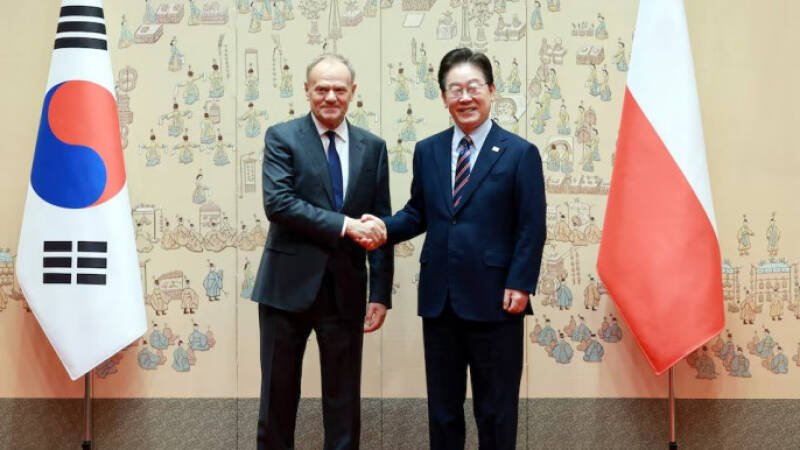



South Korea and Poland are deepening their relationship, focusing on defense and economic cooperation. Explore the implications of this strategic partnership.
South Korea and Poland are significantly upgrading their diplomatic and strategic ties, solidifying a partnership that could reshape security dynamics in Europe and Asia. Polish Prime Minister Donald Tusk recently visited Seoul, where he emphasized the importance of South Korea as a key ally, particularly in light of the evolving geopolitical landscape and after the United States.
At the heart of this strengthened alliance lies a deepening of defense industry cooperation. Before talks at the presidential Blue House, South Korean President Lee highlighted the intention to expand collaboration within the framework of a substantial $44.2 billion agreement signed in 2022. This agreement signals a commitment to joint defense projects and technology sharing, potentially transforming Poland's military capabilities and boosting South Korea's arms exports.
This means Poland will likely become a significant importer of South Korean military technology, which includes tanks, howitzers, and fighter jets. This is particularly noteworthy given the ongoing conflict in Ukraine and the need for European nations to bolster their defense capabilities.
The strengthening of ties between South Korea and Poland is important for several reasons:
In our opinion, this deepening alliance is a strategic move by both countries. Poland, seeking to modernize its military and reduce its reliance on traditional suppliers, sees South Korea as a reliable and technologically advanced partner. South Korea, in turn, gains a foothold in the European market and strengthens its global influence.
This could impact the balance of power in Europe, as Poland becomes a more formidable military force. It also sends a message to other nations about the importance of diversifying strategic partnerships. The reference to the US is interesting, perhaps subtly hinting at a desire for more autonomy in defense procurement, or signalling a shift in political priorities.
The fact that Tusk’s comments came after the US is important. It subtly implies a shift, or perhaps diversification, away from reliance on the US. This doesn't necessarily mean a weakening of the US-Poland relationship, but rather a pragmatic approach to strengthening national security through multiple avenues. It also likely reflects Poland's understanding of the need to diversify its supplier base in a world facing supply chain disruptions.
Looking ahead, we anticipate further expansion of cooperation between South Korea and Poland beyond the defense sector. This could include collaboration in areas such as technology, renewable energy, and infrastructure development.
This deepening alliance is not just a short-term agreement; it represents a long-term strategic partnership with the potential to shape the future of security and economic cooperation between Europe and Asia. The $44.2 billion framework pact is just the beginning. We expect this relationship to strengthen significantly in the coming years.
























