Rogers Pass Avalanche Warning: Safety for Spring Skiers
Rogers Pass remains under high avalanche risk. Learn about recent large avalanches, what they mean for skiers, and how to stay safe in the backcountry this spring.



Rogers Pass remains under high avalanche risk. Learn about recent large avalanches, what they mean for skiers, and how to stay safe in the backcountry this spring.
Spring skiing in Rogers Pass, British Columbia, is a tempting prospect for many backcountry enthusiasts. However, recent large avalanches have prompted continued warnings about the significant avalanche risk in the area. Following a fatal avalanche incident near Swiss Peak, authorities are urging extreme caution.
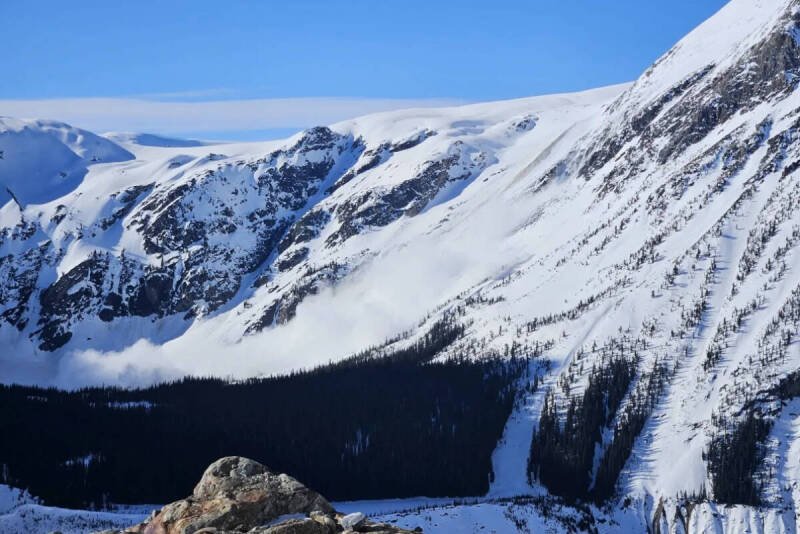
A sizable avalanche, estimated to be size 3.5 or even 4 on the avalanche size scale, was recently photographed on Mount Macoun in Rogers Pass. This avalanche underscores the unstable snowpack conditions present in the area. An avalanche of this size possesses the potential to bury and destroy vehicles, damage infrastructure, and cause widespread destruction.
These avalanches are naturally triggered, caused by warming temperatures and solar radiation weakening the snowpack and causing snow to release and slide downhill.
The news of large avalanches in Rogers Pass is crucial for several reasons:
The recent avalanche activity in Rogers Pass highlights the dynamic and unpredictable nature of mountain weather. The combination of warming temperatures and existing unstable snow layers creates a dangerous environment. In our opinion, ignoring these warnings would be extremely irresponsible.
The size 3.5-4 avalanche on Mount Macoun is a significant event, demonstrating that the risk isn't just theoretical. This is not just some small slide – it’s a powerful force of nature. The fatality near Swiss Peak serves as a tragic reminder of the consequences of underestimating avalanche danger.
It's worth noting that spring conditions often lead to a diurnal avalanche cycle, meaning that avalanche activity tends to increase during the warmest part of the day. Therefore, timing and route selection become even more critical.
The avalanche risk in Rogers Pass is likely to remain elevated as long as warming temperatures persist. Avalanches Canada will continue to monitor the situation and issue updated forecasts.
This could impact Rogers Pass for a few weeks yet, depending on the upcoming weather systems. Even with cooler weather, the weak layers buried deep will take some time to stabilize
Here's what to expect in the coming weeks:
If you're planning a trip to Rogers Pass, here are some essential safety tips:
By staying informed and taking the necessary precautions, you can enjoy the beauty of Rogers Pass while minimizing your risk of becoming involved in an avalanche. Remember, your safety is your responsibility.