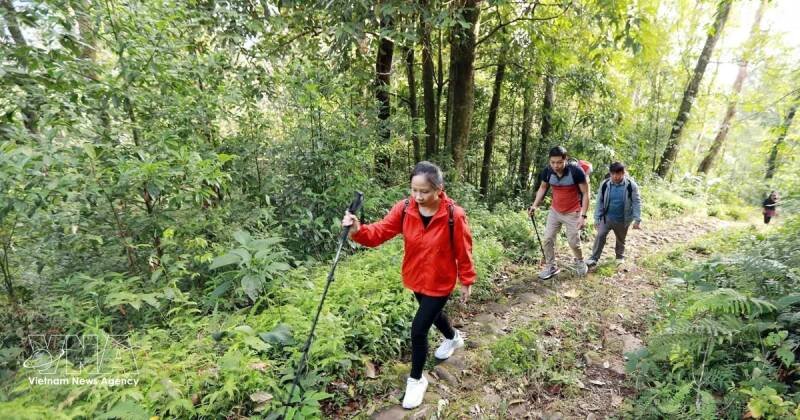
Green Tourism Blooms on Revitalized Stone Route Connecting Lai Chau and Lao Cai
Discover how Lai Chau and Lao Cai are collaborating to transform an ancient stone road into a sustainable green tourism route, boosting local economies and preserving cultural heritage.
Green Tourism Blooms on Revitalized Stone Route Connecting Lai Chau and Lao Cai
Two northern Vietnamese provinces, Lai Chau and Lao Cai, are joining forces to unlock a new era of green tourism by revitalizing the historic Pavie stone road. This ancient route, once crucial for connecting the former districts of Phong Tho (Lai Chau) and Bat Xat (Lao Cai), is being carefully surveyed, preserved, and reimagined as a sustainable tourism corridor.
The Legacy of the Pavie Stone Road
Constructed in the early 20th century, the Pavie stone road served as a vital artery for trade and communication. Over time, it fell into disrepair. Now, a collaborative effort aims to breathe new life into this historic pathway, transforming it into a unique tourism experience.
A Focus on Sustainability and Cultural Preservation
The project prioritizes sustainability, ensuring that the tourism initiatives minimize environmental impact and benefit local communities. Simultaneously, there's a strong emphasis on preserving and promoting the rich ethnic cultural identity of the region.
This includes showcasing local traditions, crafts, and cuisine, offering visitors an authentic glimpse into the lives of the people who call this region home. Projects like the Sin Suoi Ho tourism village, known for its vibrant peach blossoms, demonstrate the potential for community-based tourism.
Why This News Matters
This collaboration between Lai Chau and Lao Cai is significant for several reasons:
- Economic Development: It creates new economic opportunities for local communities through tourism-related businesses and jobs.
- Cultural Preservation: It helps to preserve and promote the unique ethnic cultural heritage of the region.
- Sustainable Tourism: It promotes a responsible and environmentally friendly approach to tourism development.
- Regional Connectivity: It strengthens the connection between the two provinces, fostering collaboration and cooperation.
Our Analysis
In our opinion, this initiative is a brilliant example of how historical preservation can be combined with sustainable tourism to drive economic growth and cultural preservation. The focus on green tourism is particularly commendable, as it acknowledges the importance of protecting the environment while simultaneously creating opportunities for local communities. The success of the Sin Suoi Ho tourism village highlights the potential for community-based tourism to thrive when properly supported.
The long-term impact of this project could be substantial. By attracting tourists who are interested in authentic cultural experiences and sustainable travel, Lai Chau and Lao Cai can establish themselves as leading destinations for responsible tourism in Vietnam. This could also impact other regions in Vietnam, inspiring similar initiatives that combine historical preservation, cultural promotion, and economic development.
Future Outlook
The future of the Pavie stone road project looks promising, but its success will depend on several factors:
- Effective Management: Careful management of tourism flows is crucial to prevent overcrowding and environmental damage.
- Community Involvement: Ensuring that local communities are actively involved in the planning and implementation of tourism initiatives is essential for their long-term success.
- Infrastructure Development: Investing in infrastructure, such as roads and accommodation, is necessary to support the growth of tourism.
- Marketing and Promotion: Effective marketing and promotion are needed to attract tourists to the region.
We believe that if these challenges are addressed effectively, the revitalized Pavie stone road has the potential to become a major tourism destination, bringing significant economic and social benefits to Lai Chau and Lao Cai. Furthermore, this project can serve as a model for other regions in Vietnam and beyond, demonstrating the power of sustainable tourism to transform communities and preserve cultural heritage.
This exciting project is still in its early stages, but the initial signs are encouraging. With careful planning and community involvement, the Pavie stone road could become a shining example of how tourism can be a force for good.