Beheaded Tiger Shark Found on Australian Beach: What Happened?
A headless tiger shark washed ashore in Western Australia, sparking community concern. Discover what authorities did and the potential reasons behind this unusual find.
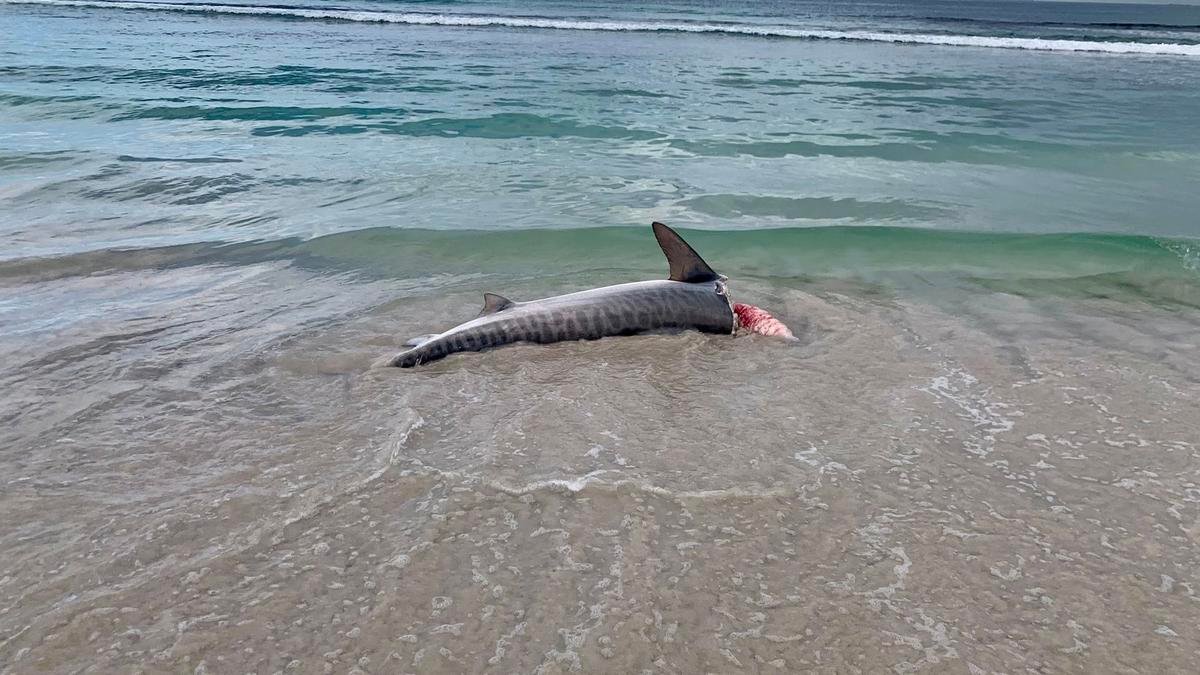



A headless tiger shark washed ashore in Western Australia, sparking community concern. Discover what authorities did and the potential reasons behind this unusual find.
A shocking discovery was made on the Beresford foreshore in Geraldton, Western Australia, when a headless tiger shark washed ashore. The unsettling find has raised concerns among local residents and authorities are now looking into the matter.
The City of Greater Geraldton was alerted to the presence of the 3-meter-long shark carcass on Friday. Following protocol, the city took responsibility for removing and disposing of the remains. The disposal was done to safeguard public health and safety and prevent further disturbance to the beach environment.
Tiger sharks are large predatory sharks found in tropical and subtropical waters around the world. They are known for their distinctive stripes (which fade as they age) and their opportunistic feeding habits. As apex predators, tiger sharks play a crucial role in maintaining the balance of marine ecosystems.
The unusual state of the shark carcass, specifically the fact that it was beheaded, has fueled speculation and worry within the community. Residents are concerned about what could have caused such a gruesome injury, and the potential implications for other marine life and beachgoers.
While the exact reason for the shark's beheading is unknown, there are several possibilities. One is that the shark was caught as bycatch by fishermen, or even targeted for shark finning. Damage from boat propellers or other marine vessels could also be a cause, or perhaps scavenging after the sharks death. The beheading may not have occurred while the shark was alive.
The discovery of a headless tiger shark highlights the ongoing pressures facing marine ecosystems. Overfishing, habitat destruction, and illegal wildlife trade all pose significant threats to shark populations worldwide. This incident serves as a reminder of the need for greater awareness and conservation efforts to protect these important animals and their ocean environment.
Sharks, as apex predators, play a vital role in maintaining the health and balance of marine ecosystems. They help to control populations of other marine species and prevent any one species from becoming dominant. The loss of sharks can have cascading effects throughout the food web, leading to declines in biodiversity and ecosystem instability.
Further investigation may be required to determine the precise circumstances surrounding the shark's death and to address any potential threats to marine life in the area. In the meantime, the incident serves as a stark reminder of the need for vigilance and stewardship of our oceans.