Top 5 US Air Force Bases with the Most Aircraft: Power Projection in Action
Discover the 5 US Air Force bases with the largest aircraft fleets. Understand their strategic importance, mission, and impact on national security. Plus, analysis and future outlook.
Top 5 US Air Force Bases with the Most Aircraft: A Deep Dive
The United States Air Force (USAF) is a global powerhouse, relying on a vast network of air bases to project its power and maintain national security. Some of these bases are truly massive, housing hundreds of aircraft and supporting thousands of personnel. This article breaks down the top 5 USAF bases with the most aircraft, exploring their significance and future.
Understanding Air Force Base Size and Importance
The number of aircraft stationed at a base is a key indicator of its operational capacity and strategic importance. Bases with large fleets often serve as hubs for training, testing, or major operational air wings. They are critical for maintaining air superiority and responding to global crises.
The Top 5 Bases
While the exact number of aircraft at each base is often classified, publicly available information and expert analysis allow us to identify the top contenders:
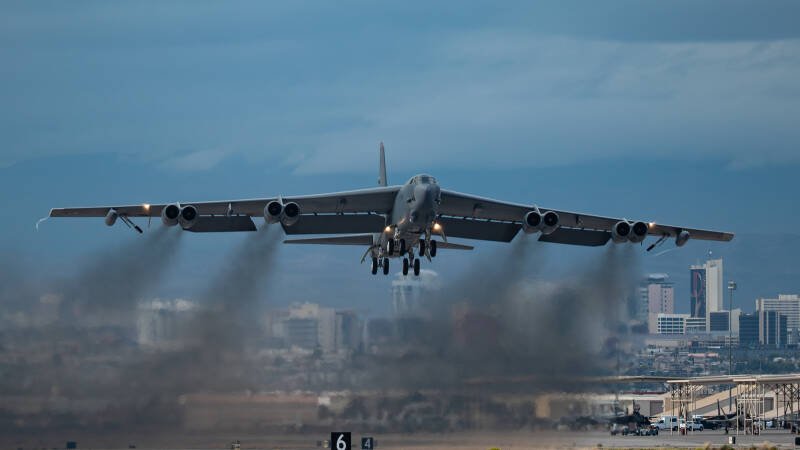
- Nellis Air Force Base, Nevada: Known as the "Home of the Fighter Pilot," Nellis AFB is a premier training location. It hosts Red Flag exercises, the USAF's most realistic air combat training exercises, and is home to numerous fighter squadrons and test and evaluation units.
- Eglin Air Force Base, Florida: Eglin is a massive base responsible for testing and evaluating new weapons systems. It hosts a wide variety of aircraft, from fighters and bombers to special operations aircraft and unmanned aerial vehicles (UAVs).
- Luke Air Force Base, Arizona: Luke AFB is the primary training base for F-35 Lightning II fighter pilots. It's crucial for maintaining the USAF's edge in air combat capabilities.
- Davis-Monthan Air Force Base, Arizona: While known for the "Boneyard" (AMARG - Aerospace Maintenance and Regeneration Group) which stores retired aircraft, Davis-Monthan also houses significant operational squadrons, including A-10 attack aircraft.
- Hill Air Force Base, Utah: Hill AFB is home to the 388th Fighter Wing, one of the first operational F-35A Lightning II units. It also houses the Ogden Air Logistics Complex, a major maintenance and repair depot.
Why This News Matters
Understanding the distribution of aircraft across these key bases provides insight into the USAF's strategic priorities. It highlights where the Air Force is investing in training, testing, and operational capabilities. This information is crucial for policymakers, defense analysts, and the general public interested in national security.
Our Analysis
In our opinion, the concentration of aircraft at these five bases reflects the evolving nature of modern air warfare. The focus on fighter training at Nellis and Luke, coupled with the testing and evaluation capabilities at Eglin, demonstrates the USAF's commitment to maintaining technological superiority. The presence of A-10s at Davis-Monthan reminds us of the importance of close air support, while Hill AFB underscores the critical role of the F-35 in the future of air combat.
The selection of these bases also likely depends on factors like airspace availability, weather conditions, and proximity to supporting infrastructure. Each base has unique characteristics that make it ideal for its specific mission. The diversity of these bases showcases the breadth and depth of the USAF's capabilities.
Economic Impact
Furthermore, these bases are significant economic engines for their local communities. They provide thousands of jobs, directly and indirectly, and contribute billions of dollars to the regional economy. Any changes to operations or force structure at these bases would have significant economic consequences.
Future Outlook
The role of these top air bases is likely to evolve in the coming years. The USAF is investing heavily in new technologies, such as unmanned systems and advanced sensors, which will require new training and testing capabilities. Existing bases may need to adapt their infrastructure and missions to accommodate these changes.
This could impact the distribution of aircraft across different bases, potentially leading to some bases becoming more prominent while others may see a reduction in force structure. In our opinion, Nellis, Eglin, and Luke are likely to remain critical hubs for training and testing, given their existing infrastructure and expertise.
Ultimately, the future of these bases depends on the evolving geopolitical landscape and the USAF's strategic priorities. As the US faces new challenges from peer competitors, the Air Force will need to maintain a flexible and adaptable force structure, ensuring that it can project power and defend national interests around the globe.