Rajasthan University Protest: NSUI vs. RSS Program - What You Need to Know
Student protests erupt at Rajasthan University over an RSS-linked event. We break down the conflict, its implications, and what it means for the future of campus politics.



Student protests erupt at Rajasthan University over an RSS-linked event. We break down the conflict, its implications, and what it means for the future of campus politics.
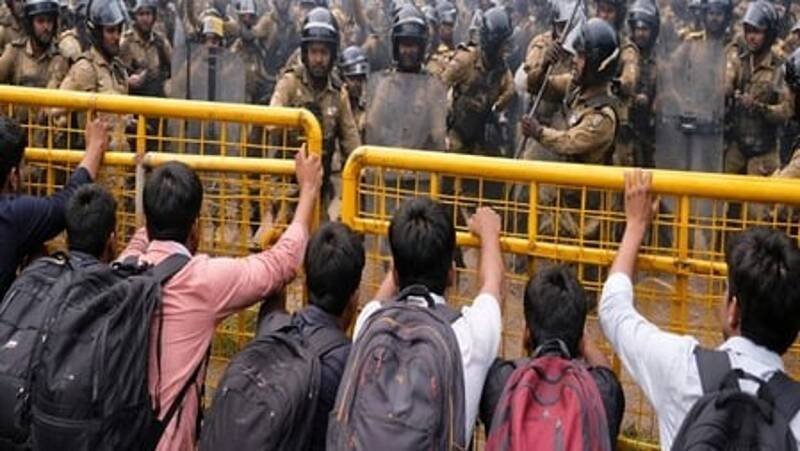
Tensions flared at Rajasthan University recently as the National Students' Union of India (NSUI), the student wing of the Indian National Congress, staged protests against a program allegedly linked to the Rashtriya Swayamsevak Sangh (RSS), a right-wing Hindu nationalist organization. The police responded by barricading the university gates to prevent escalation.
The protests centered on a scheduled event that NSUI members believed was being promoted or supported by the RSS. Details of the event itself are somewhat unclear from initial reports, but the NSUI's primary objection appears to be the perceived influence of the RSS on university grounds. The student group sees the RSS as representing an ideology that clashes with their own, and they are trying to prevent its spread within the university.
In anticipation of potential clashes, law enforcement erected barricades around the Rajasthan University campus. This measure aimed to prevent the protests from disrupting normal university activities and, more importantly, to ensure the safety of students and faculty.
This event highlights the ongoing political polarization within Indian universities. Student politics in India is often a microcosm of national politics, with different student organizations representing various ideologies and political parties. The NSUI's protest against the RSS-linked program reflects a broader struggle for ideological dominance on university campuses across the country.
Furthermore, these kinds of incidents can disrupt the academic environment and create an atmosphere of tension and anxiety among students. It’s important that university administrations find ways to balance freedom of expression with the need to maintain order and ensure a safe and productive learning environment for everyone.
In our opinion, this situation reflects a deeper issue of ideological conflict within Indian society. Universities, as centers of learning and debate, often become battlegrounds for these larger societal conflicts. The NSUI's actions are likely motivated by a genuine concern about the perceived encroachment of a particular ideology on the university's intellectual space.
The police response, while understandable from a security perspective, also raises questions about the limits of freedom of expression and the right to protest. It is a delicate balance between maintaining order and protecting democratic rights. The use of barricades, while preventing physical clashes, can also stifle dissent and limit students' ability to voice their concerns.
It's worth noting that the RSS has a long history in India, and its relationship with various political parties and student organizations is often fraught with tension. The RSS-affiliated student wing, the Akhil Bharatiya Vidyarthi Parishad (ABVP), is often a rival to the NSUI on campuses across India.
This incident at Rajasthan University is unlikely to be an isolated one. We anticipate similar clashes and protests in the future as different student organizations vie for influence on university campuses. The increasing political polarization in India suggests that these kinds of incidents may become more frequent and intense.
This could impact the educational environment by creating a climate of fear and intolerance. It is crucial for university administrations, student organizations, and law enforcement agencies to engage in constructive dialogue to address these issues and find ways to promote peaceful coexistence and respect for diverse viewpoints.
Ultimately, the future of campus politics in India will depend on the ability of different student groups to engage in respectful debate and find common ground, even in the face of deep ideological differences. A failure to do so could lead to further polarization and disruption of the academic environment.