Green Bank Telescope to Track NASA's Artemis II Moon Mission - Why It Matters
The Green Bank Telescope joins NASA's Artemis II mission, providing critical tracking support for humanity's return to the Moon. Explore the significance and future implications.
Green Bank Telescope Joins NASA's Artemis II Mission
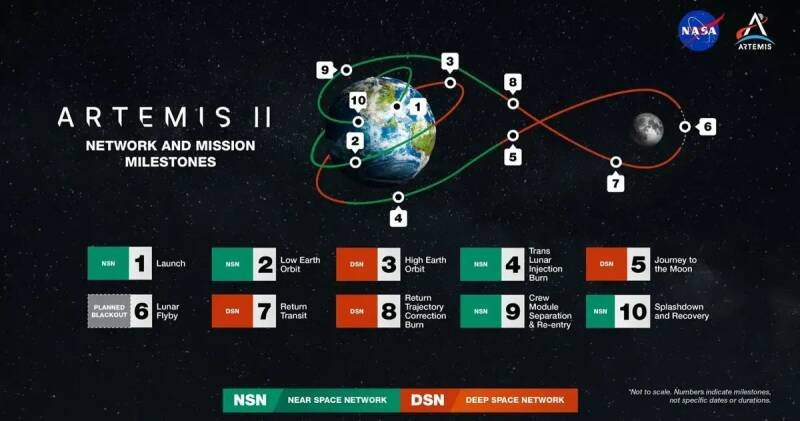
The iconic Green Bank Telescope (GBT), operated by the National Science Foundation (NSF) in Green Bank, West Virginia, is set to play a vital role in NASA's ambitious Artemis II mission. This mission, a crucial step towards returning humans to the Moon, will see the GBT providing high-sensitivity tracking and support. This means the GBT will be listening intently, helping NASA maintain contact with the Orion spacecraft and its crew during their lunar journey.
What is the Artemis II Mission?
Artemis II is NASA's second Artemis mission, and the first crewed one. It's designed to send four astronauts on a flight around the Moon, testing crucial systems and procedures needed for future lunar landings. This mission is a huge step towards establishing a long-term human presence on the Moon.
GBT's Role: A Sensitive Listener in Space
The GBT, being one of the world’s largest steerable radio telescopes, boasts exceptional sensitivity. This is crucial for tracking spacecraft traveling vast distances. Its ability to detect faint signals makes it an invaluable asset for maintaining communication with Artemis II as it ventures around the Moon. The GBT acts as a crucial supplemental ear for NASA’s Deep Space Network (DSN). While the DSN is NASA's primary communication system for deep-space missions, the GBT offers a backup and increased capacity, especially when multiple missions are active.
Why This News Matters
This announcement is significant for several reasons:
* **Reinforces the GBT's Importance:** It highlights the continued relevance of ground-based radio telescopes in modern space exploration. Despite advancements in satellite-based communication, large telescopes like the GBT provide unique capabilities.
* **Boosts International Collaboration:** This partnership between the NSF and NASA showcases the importance of collaboration between government agencies in achieving ambitious goals.
* **Advancing Lunar Exploration:** The Artemis II mission is a key milestone in our quest to return to the Moon and establish a sustainable presence there. GBT's support is critical for mission success.
* **Inspiring Future Generations:** The Artemis program, and GBT's involvement, will inspire young people to pursue careers in science, technology, engineering, and mathematics (STEM).
Our Analysis
In our opinion, the inclusion of the Green Bank Telescope in the Artemis II mission is a smart move by NASA. Relying solely on the Deep Space Network could create a bottleneck. The GBT provides a robust and reliable backup, increasing the chances of a successful mission. This also demonstrates the versatility of the GBT, originally designed for astronomical research, in supporting deep-space exploration. This could impact how other astronomical instruments are utilized in future space missions.
The GBT’s sensitivity is a major advantage. Its ability to detect weak signals means that even in challenging conditions, communication with the Orion spacecraft is more likely to be maintained. This is particularly important as Artemis II will be venturing into deep space, far from Earth.
Future Outlook
Looking ahead, we expect the GBT to continue playing a vital role in future Artemis missions, including the eventual crewed lunar landings. The data collected by the GBT during Artemis II will also provide valuable insights into the behavior of radio signals in deep space, which can be used to improve communication systems for future missions.
Furthermore, this collaboration could pave the way for similar partnerships between astronomical observatories and space agencies around the world. This would lead to a more efficient and effective approach to space exploration, leveraging the expertise and resources of both communities.
The success of the Artemis program relies on the integration of diverse technologies and resources. The Green Bank Telescope’s contribution is a testament to the enduring value of ground-based astronomy in pushing the boundaries of human exploration. We believe that this collaboration will be a win-win for both NASA and the astronomical community, accelerating our understanding of the universe and our place within it.