Climate Change Threatens India's Elections: A Deep Dive
Climate change impacts Indian elections with rising heat and storms. Learn how this affects voter turnout and election preparedness. Includes analysis and future outlook.
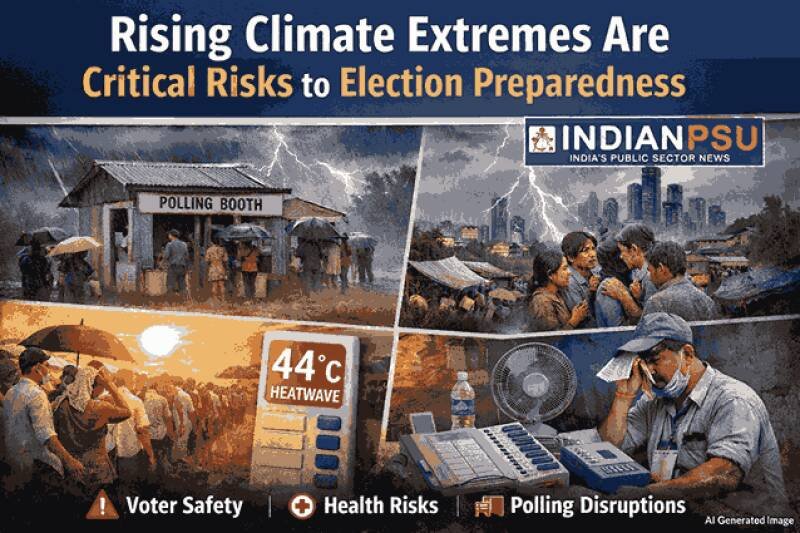



Climate change impacts Indian elections with rising heat and storms. Learn how this affects voter turnout and election preparedness. Includes analysis and future outlook.
As India gears up for crucial elections in several states, a new and increasingly concerning factor is emerging: climate change. Rising temperatures, unpredictable thunderstorms, and increased humidity are posing significant challenges to election preparedness and voter participation, particularly in states like West Bengal, Kerala, Assam, Tamil Nadu, and the Union Territory of Puducherry.
Millions of voters are expected to cast their ballots across hundreds of assembly constituencies. However, extreme weather conditions could deter people from going to the polls, potentially impacting the democratic process. This is a serious issue that demands immediate attention and proactive solutions.
Here's a breakdown of the key climate-related challenges affecting the elections:
The impact of climate change on elections goes beyond mere inconvenience. It raises fundamental questions about accessibility, fairness, and the very foundation of democracy. If extreme weather disproportionately affects certain communities or demographics, it could skew election results and undermine the legitimacy of the outcome. This is a global issue, but it’s particularly acute in a populous and diverse nation like India.
Furthermore, the resources required to mitigate these climate-related risks – providing shade, water, and medical assistance at polling stations – divert funds and manpower from other essential aspects of election management.
In our opinion, the Election Commission of India (ECI) needs to take a more proactive and comprehensive approach to address the challenges posed by climate change. While some measures, such as providing basic amenities at polling stations, are already in place, they may not be sufficient to cope with increasingly extreme weather events.
It's crucial to conduct thorough vulnerability assessments in different regions to identify the specific climate risks and tailor mitigation strategies accordingly. This includes:
The problem of climate change impacting elections will only worsen in the years to come. As global temperatures continue to rise and extreme weather events become more frequent and intense, the challenges to election preparedness and voter participation will become even greater.
This could impact not just India, but also other nations holding elections during vulnerable periods. A holistic strategy that involves collaboration between the ECI, state governments, disaster management agencies, and civil society organizations is essential to ensure that elections remain free, fair, and accessible to all, regardless of the weather. Adapting to these changes will be crucial to upholding democratic principles.
In our opinion, long-term solutions require addressing the root causes of climate change through ambitious mitigation efforts and a transition to a sustainable economy. Only by tackling the climate crisis head-on can we protect the integrity of our democratic institutions and ensure a better future for all.
























