Trump Allies and Legal Hurdles: Will a New Attorney General Change Anything?
Pam Bondi couldn't prosecute Trump's political rivals. Will her replacement succeed? We analyze the challenges, implications, and future outlook of this legal situation.
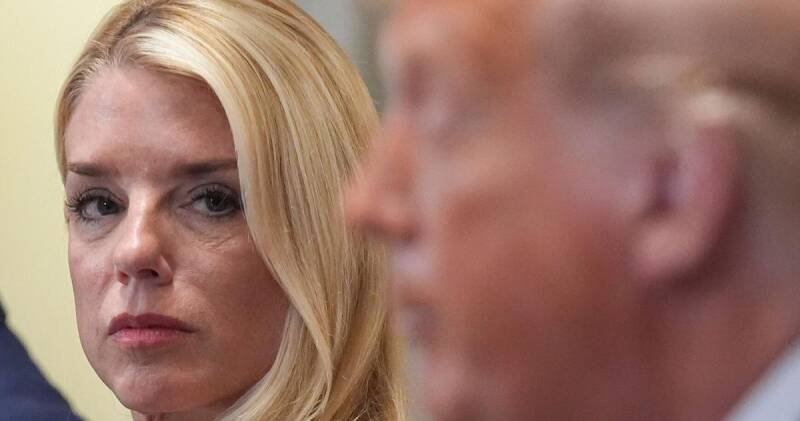



Pam Bondi couldn't prosecute Trump's political rivals. Will her replacement succeed? We analyze the challenges, implications, and future outlook of this legal situation.
Pam Bondi, a prominent figure in Republican circles and a staunch supporter of former President Donald Trump, recently left her position after facing criticism for not bringing criminal charges against individuals perceived as Trump's political adversaries. This raises a critical question: will her successor be any more successful in navigating the complex legal and political landscape surrounding such cases?
Bondi's tenure was marked by significant expectations from certain segments of the Republican base who hoped to see legal action taken against prominent Democrats and others critical of Trump. However, despite these expectations, no major criminal cases against these individuals materialized. This perceived failure has led to speculation about the reasons behind the lack of prosecutions, ranging from insufficient evidence to potential political considerations.
Prosecuting political opponents is inherently fraught with challenges. The burden of proof in criminal cases is extremely high, and any prosecution must be based on solid evidence that establishes guilt beyond a reasonable doubt. Furthermore, such cases are often subject to intense public scrutiny, and even the appearance of political motivation can undermine the credibility of the prosecution. The Justice Department's (DOJ) own guidelines severely restrict investigations based on political consideration alone.
The failure of Bondi to bring charges against Trump's political rivals highlights the significant hurdles involved in prosecuting individuals for political reasons. This situation raises fundamental questions about the role of the justice system in a democratic society. The independence of the DOJ and its protection from political influence are crucial for maintaining the rule of law and ensuring that prosecutions are based solely on evidence and legal principles, not political agendas. How these types of cases are handled will signal to all parties if the system is fair and just, or whether the DOJ is politically motivated.
In our opinion, the lack of prosecutions under Bondi's tenure likely reflects a combination of factors. While political pressure may have existed, it's also highly probable that the evidence required to bring successful criminal charges against Trump's political opponents simply wasn't there. The high legal bar for criminal prosecution, coupled with the intense scrutiny these cases would face, creates a formidable challenge for any prosecutor. Bondi was put in a difficult situation due to the charged political atmosphere.
The incoming Attorney General will inherit this complex situation. They will face pressure from various sides, including those who expect them to pursue investigations against Trump's political opponents and those who demand that the justice system remain impartial and free from political interference. The way the new Attorney General handles these competing pressures will be a crucial test of their leadership and integrity. It will demonstrate to both sides that justice can or cannot be served.
Looking ahead, the future remains uncertain. While the new Attorney General may face pressure to revisit potential cases against Trump's political opponents, it's unlikely that any major prosecutions will occur without compelling new evidence. The political and legal risks associated with such cases are simply too high. Furthermore, any attempt to pursue politically motivated prosecutions could further erode public trust in the justice system. This could impact future cases, or cause people to distrust the justice system altogether.
Ultimately, the focus should be on upholding the rule of law and ensuring that all individuals, regardless of their political affiliations, are treated fairly under the justice system. This requires a commitment to impartiality, transparency, and a rigorous adherence to legal principles.