Taiwan's Han Kuang Exercises: Integrating US Military Tactics for Enhanced Defense
Taiwan's annual Han Kuang exercises are evolving, incorporating US military training methods to bolster defense capabilities against potential threats. Explore the implications and future outlook.
Taiwan's Han Kuang Exercises: Integrating US Military Tactics for Enhanced Defense
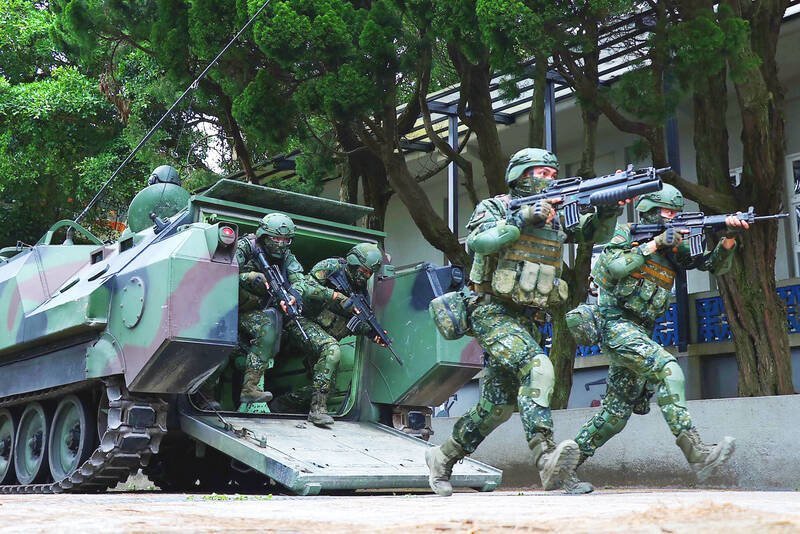
Taiwan's annual Han Kuang exercises are set to incorporate more US military training methods, signaling a significant shift in strategy designed to bolster the island's defense capabilities. These exercises, Taiwan's largest annual war games, simulate a response to a potential invasion, and the integration of US tactics aims to improve interoperability and readiness.
What are the Han Kuang Exercises?
The Han Kuang exercises are Taiwan's most important military drills. They are held annually to test the island's ability to defend itself against potential threats, primarily from mainland China. The exercises involve all branches of the military and are designed to simulate a full-scale invasion scenario.
US Influence on Taiwan's Military Training
The increasing integration of US military training methods reflects a growing strategic alignment between the United States and Taiwan. This collaboration aims to modernize Taiwan's defense strategies and enhance its ability to respond effectively to potential aggression. This involves adapting US doctrines and techniques to the specific geographic and strategic context of Taiwan.
Why This News Matters
This news is significant for several reasons. Firstly, it highlights Taiwan's commitment to strengthening its defense capabilities in the face of growing regional tensions. Secondly, it underscores the deepening strategic relationship between Taiwan and the United States. Finally, it has implications for cross-strait relations and the broader geopolitical landscape of the Indo-Pacific region. Any perceived increase in Taiwan's defense capabilities could be seen as provocative by China.
Our Analysis
In our opinion, this move is a pragmatic step for Taiwan. Given the current geopolitical climate, it's crucial for Taiwan to enhance its defense capabilities. By integrating US military tactics, Taiwan can leverage the experience and expertise of one of the world's leading military powers.
However, this strategy is not without its risks. Closer military ties with the US could further strain relations with China, potentially escalating tensions in the region. It's vital that Taiwan balances its defense needs with the imperative of maintaining stable cross-strait relations.
Potential Benefits
- Improved defense capabilities
- Enhanced interoperability with US forces
- Stronger deterrence against potential aggression
Potential Risks
- Increased tensions with China
- Escalation of regional conflicts
- Dependence on external support
Future Outlook
Looking ahead, we anticipate that the integration of US military training methods into Taiwan's Han Kuang exercises will continue to deepen. This could involve increased personnel exchanges, joint training exercises, and the adoption of advanced US military technologies. The success of this strategy will depend on Taiwan's ability to adapt US tactics to its unique defense needs and to manage the delicate balance of its cross-strait relations.
This could impact other nations in the region, encouraging them to re-evaluate their own defense strategies. We might see increased military spending and closer security partnerships throughout the Indo-Pacific region as countries seek to bolster their security in an increasingly uncertain geopolitical environment.
Ultimately, the effectiveness of this strategy will be judged by its ability to deter aggression and maintain peace and stability in the Taiwan Strait. The coming years will be crucial in determining whether this enhanced defense cooperation can achieve these goals.