Project Hail Mary Movie Adaptation: A Screenwriter's Nightmare Turned Dream?
Explore the challenges and triumphs of adapting Andy Weir's "Project Hail Mary" for the big screen, as screenwriter Drew Goddard reveals the unique hurdles of bringing a faceless alien to life.
Project Hail Mary's Movie Adaptation: A Screenwriter's Unique Challenge
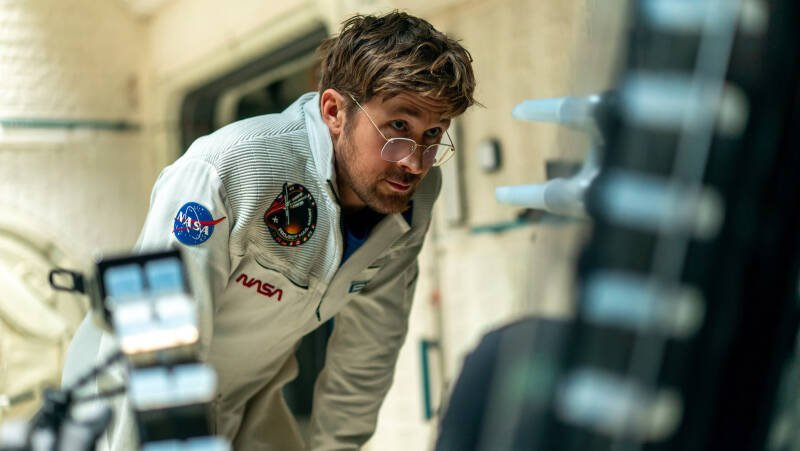
Adapting a beloved book into a movie is never easy. But when one of your main characters is an alien rock with no face, the challenge reaches a whole new level. That's exactly what screenwriter Drew Goddard faced when tackling Andy Weir's acclaimed science fiction novel, "Project Hail Mary," set to star Ryan Gosling.
The Rocky Road to Adaptation
Goddard, known for his work on "The Martian" (another Weir adaptation) and "The Cabin in the Woods," described the process of adapting "Project Hail Mary" as a "perfect nightmare." The book, which follows an astronaut who wakes up with amnesia and discovers he's humanity's last hope, features a fascinating alien character named Rocky. Rocky is a silicon-based lifeform from another star system, and he communicates through a complex system of musical tones and color changes.
Translating this unique character to the screen presented significant hurdles. How do you make a faceless rock relatable and engaging? How do you convey complex emotions and communication without traditional facial expressions or dialogue? These were the questions that kept Goddard up at night.
Why This News Matters
The adaptation of "Project Hail Mary" is highly anticipated by fans of the book and science fiction enthusiasts alike. Andy Weir has a proven track record of writing captivating science-based stories, and the involvement of talents like Ryan Gosling and Drew Goddard raises expectations even higher. The success of this adaptation could pave the way for more ambitious and unconventional science fiction films in the future.
Furthermore, the challenges faced by Goddard highlight the complex artistic and technical considerations involved in bringing unique characters and narratives to the big screen. Understanding this process offers a glimpse into the world of filmmaking and the creative problem-solving required to adapt stories from one medium to another.
Our Analysis
In our opinion, the "perfect nightmare" described by Drew Goddard is precisely what makes this adaptation so intriguing. The challenges inherent in bringing Rocky to life offer an opportunity for groundbreaking visual effects and innovative storytelling techniques. The filmmakers will need to find creative ways to connect with the audience emotionally through Rocky's unique form of communication.
The success of "The Martian" also suggests that Goddard is well-equipped to handle the scientific rigor and human drama at the heart of Weir's novels. His experience in crafting compelling narratives around complex scientific concepts will likely prove invaluable in adapting "Project Hail Mary."
Future Outlook
The production of "Project Hail Mary" is still in development, and it remains to be seen how the filmmakers will ultimately solve the challenges of bringing Rocky to life. However, the combination of a compelling story, talented cast and crew, and innovative visual effects holds tremendous potential.
This could impact the future of science fiction filmmaking by demonstrating that even the most unconventional characters and narratives can be successfully adapted for the big screen. It also suggests a growing appetite for intelligent and thought-provoking science fiction stories that explore complex themes and push the boundaries of cinematic storytelling. We expect more news on production and casting to come over the next year.
Ultimately, the success of "Project Hail Mary" will depend on the ability of the filmmakers to capture the heart and soul of the book while embracing the unique challenges of bringing a faceless alien to life. The "perfect nightmare" may just turn out to be a cinematic dream come true.