Mysore Airport Building Height Restrictions: Red Zone Alert Explained
Learn about the building height restrictions around Mysore Airport's Red Zone. Understand the implications and future outlook for property owners and developers.



Learn about the building height restrictions around Mysore Airport's Red Zone. Understand the implications and future outlook for property owners and developers.
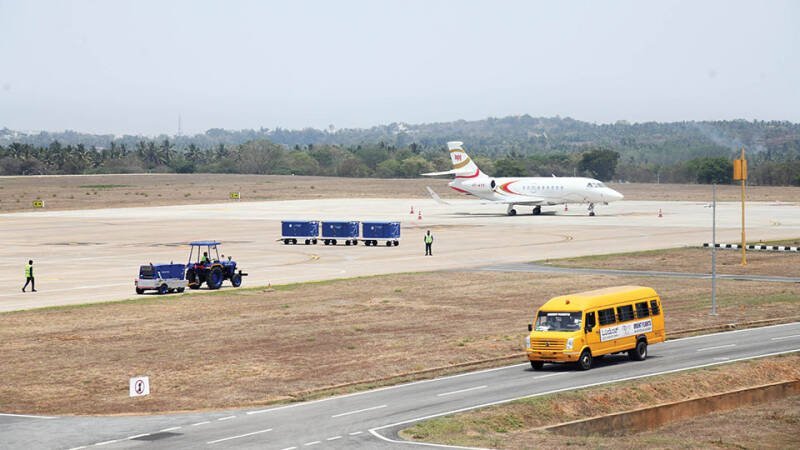
The Airports Authority of India (AAI) has issued a warning regarding unauthorized construction around Mysore Airport (also known as Mysuru Airport) in Mandakalli. Specifically, strict height restrictions are now in effect within the designated 'Red Zone' surrounding the airport.
Mysore Airport Director P.V. Ushakumari released a public advisory highlighting these restrictions, emphasizing the importance of adhering to these rules for safety and operational efficiency. This alert signifies a renewed focus on enforcing existing regulations to safeguard aircraft operations.
The 'Red Zone' refers to a specifically defined area surrounding an airport where building height limitations are most stringent. These zones are established to prevent obstructions to aircraft takeoffs and landings, ensuring a safe flight path. The closer a property is to the runway, the more severe the height restriction typically is.
These height restrictions directly impact property owners and developers in the affected area. Any existing structure exceeding the permissible height might face demolition or alteration. Future construction projects must meticulously adhere to the AAI guidelines to avoid legal complications and ensure compliance.
This isn't just a technical announcement; it has real-world consequences. For homeowners planning renovations, developers eyeing new projects, or even potential buyers considering properties near the airport, understanding these restrictions is crucial. Ignoring them could lead to significant financial losses and legal battles.
Moreover, the enforcement of these restrictions contributes to the overall safety and efficiency of Mysore Airport. By minimizing potential obstructions, the AAI enhances the safety of air travel for passengers and crew.
In our opinion, this move by the AAI is a necessary step to ensure the continued safe operation of Mysore Airport. The increasing urbanization around airports necessitates stringent regulatory oversight to prevent accidents caused by building obstructions.
This could impact future real estate development in the immediate vicinity of the airport. Developers will need to incorporate height restrictions into their plans, potentially leading to changes in architectural designs and project feasibility. It may also influence property values in the long run.
While these restrictions might seem burdensome to some, they are ultimately in the best interest of public safety. A well-regulated airport environment is crucial for economic growth and regional connectivity.
We anticipate increased scrutiny and enforcement of building regulations around Mysore Airport. The AAI is likely to conduct regular inspections to identify and address any violations. Property owners should proactively check their compliance with the height restrictions to avoid potential issues.
It's also possible that the AAI will introduce further measures to enhance safety and efficiency, such as implementing advanced surveillance technologies or revising the Red Zone boundaries based on evolving operational needs. Transparency and clear communication from the AAI will be essential to ensure smooth implementation and minimize disruptions.
Furthermore, this situation highlights the need for better coordination between urban planning authorities and aviation regulators to ensure sustainable development around airports. A proactive and collaborative approach can help balance economic growth with aviation safety.
























