Mark Few Praises Tommy Lloyd's Success at Arizona: What It Means for College Basketball
Gonzaga coach Mark Few expresses pride in Tommy Lloyd's success at Arizona. Explore the impact on college basketball and what the future holds for both programs.
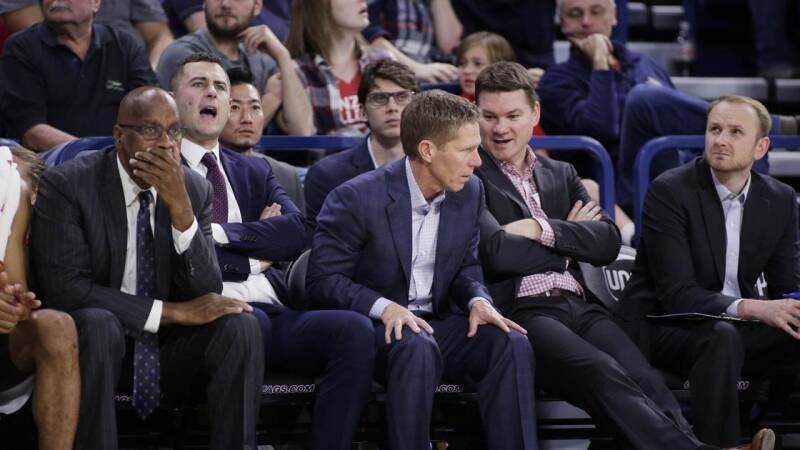



Gonzaga coach Mark Few expresses pride in Tommy Lloyd's success at Arizona. Explore the impact on college basketball and what the future holds for both programs.
Gonzaga University's head basketball coach, Mark Few, recently expressed his immense joy and pride in the success of Tommy Lloyd, the current head coach of the University of Arizona's basketball program. Few revealed that he always believed Lloyd would find success at Arizona, noting that the university "had to make it right" for him. This statement suggests a recognition of Lloyd's potential and the opportunity Arizona presented.
Tommy Lloyd spent over two decades as an assistant coach under Mark Few at Gonzaga, playing a pivotal role in building the Bulldogs into a national powerhouse. His departure to Arizona marked a significant shift, giving him the chance to lead his own program after years of dedicated service. It was a move widely anticipated within the college basketball community.
This isn't just about two coaches exchanging pleasantries. It highlights the importance of coaching trees and the enduring relationships forged within the competitive world of college basketball. Lloyd's success at Arizona reflects positively not only on him but also on Few and the Gonzaga program that nurtured his talent. Furthermore, Arizona's rise under Lloyd has injected new life into the Pac-12 conference, creating more competitive matchups and exciting storylines for fans.
Tommy Lloyd’s swift turnaround of the Arizona program is truly impressive. He immediately implemented a fast-paced, offensive style, leveraging his recruiting prowess to bring in top talent. This success demonstrates his coaching acumen and confirms Few's long-held belief in his abilities. For Gonzaga, seeing a former assistant thrive is a testament to their program's ability to develop coaches as well as players.
In our opinion, Mark Few's statement goes beyond mere congratulations. It hints at a deep respect and understanding between the two coaches. It suggests that Few recognized Lloyd's readiness for a head coaching role and actively supported his transition to Arizona. We believe this kind of mentorship is crucial for the continued growth and evolution of college basketball.
The rivalry between Gonzaga and Arizona, while friendly, will be interesting to watch. Both programs are consistently among the nation's elite. The coaching connection adds another layer to the competitive dynamic, as both Few and Lloyd understand each other's strategies and tendencies. This could lead to fascinating tactical battles on the court.
The success of Tommy Lloyd at Arizona signals a potential shift in the landscape of college basketball. His ability to quickly build a winning program demonstrates that new coaching talent can challenge established powerhouses. This could encourage other universities to take risks on up-and-coming coaches, leading to greater diversity and innovation within the sport.
While both Gonzaga and Arizona are currently thriving, they will face numerous challenges in the years to come. Maintaining consistent success requires continuous recruiting efforts, strategic adjustments, and the ability to adapt to changing player dynamics. The pressure to perform will only intensify as both programs strive to remain at the top of the college basketball world. This could impact recruiting, as high-profile recruits are now faced with another top-tier option in Arizona, giving Gonzaga a little more competition.
Ultimately, the story of Mark Few and Tommy Lloyd is a testament to the power of mentorship and the importance of developing talent from within. Their relationship exemplifies the positive aspects of college basketball, where coaches can inspire and empower their assistants to achieve great things. The legacy of their connection will undoubtedly shape the future of both programs and the sport as a whole.