Iran Threatens US Troops in Strait of Hormuz: What It Means
Iran warns the US with "Welcome to Hell" rhetoric over the Strait of Hormuz. Understand the context, potential impact, and future outlook of this escalating tension.
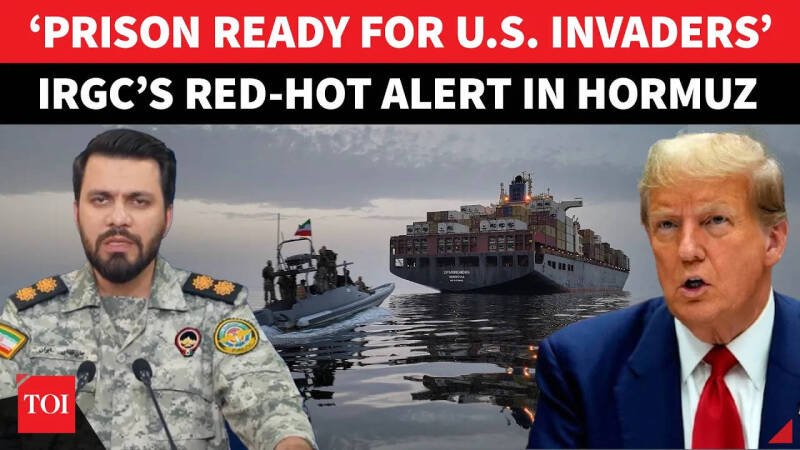



Iran warns the US with "Welcome to Hell" rhetoric over the Strait of Hormuz. Understand the context, potential impact, and future outlook of this escalating tension.
Tensions in the Middle East are escalating once again. Iran's Islamic Revolutionary Guard Corps (IRGC) recently issued a stark warning to the United States regarding its presence and activities in the Strait of Hormuz. This vital waterway, crucial for global oil supply, has become a flashpoint for potential conflict. The IRGC's message, laden with aggressive rhetoric, raises serious questions about maritime security and the future of US-Iran relations.
The IRGC's statement, delivered on Saturday, explicitly warns the US against any further aggression. They declared the Strait of Hormuz a "definitive strategy" for Iran and threatened a severe "punishment" for any perceived hostile actions by US troops. This isn't the first time Iran has issued such warnings, but the charged language amplifies concerns about a potential miscalculation leading to a dangerous escalation.
To understand the gravity of the situation, it's crucial to recognize the strategic importance of the Strait of Hormuz. This narrow waterway connects the Persian Gulf to the Gulf of Oman and the Arabian Sea. A significant percentage of the world's oil supply passes through it daily. Any disruption in this region could have devastating consequences for the global economy, leading to soaring energy prices and widespread economic instability.
The IRGC's warning is not simply rhetoric. It signifies a tangible threat to maritime security in a volatile region. Any misstep or misinterpretation could quickly escalate into a military confrontation. This could impact global oil markets, international trade, and the broader geopolitical landscape. Furthermore, the heightened tension adds another layer of complexity to the already strained relationship between the US and Iran.
In our opinion, the IRGC's aggressive stance is likely a combination of domestic posturing and a genuine attempt to deter US actions in the region. Iran may be trying to project strength and deter perceived US interference in its sphere of influence. The timing of this warning also coincides with ongoing nuclear negotiations and regional power struggles, suggesting a calculated effort to gain leverage. This could significantly impact the ongoing geopolitical dynamics.
However, the use of inflammatory language carries inherent risks. It increases the chances of miscalculation and unintended consequences. A minor incident in the Strait of Hormuz, misconstrued as an act of aggression, could trigger a disproportionate response, leading to a larger conflict. We believe both sides need to exercise extreme caution and de-escalate the rhetoric.
The future of US-Iran relations and maritime security in the Strait of Hormuz remains uncertain. Several factors could influence the situation:
Ultimately, preventing a conflict in the Strait of Hormuz requires diplomacy, de-escalation, and a commitment to international law. The world needs to closely monitor the situation and encourage both sides to engage in constructive dialogue to find a peaceful resolution. Failure to do so could have catastrophic consequences for the region and the global economy.