How Many Marines and Sailors Live on a US Aircraft Carrier?
Ever wondered how many people live on a US aircraft carrier? Learn about the crew size, roles, and why it matters in this detailed breakdown.
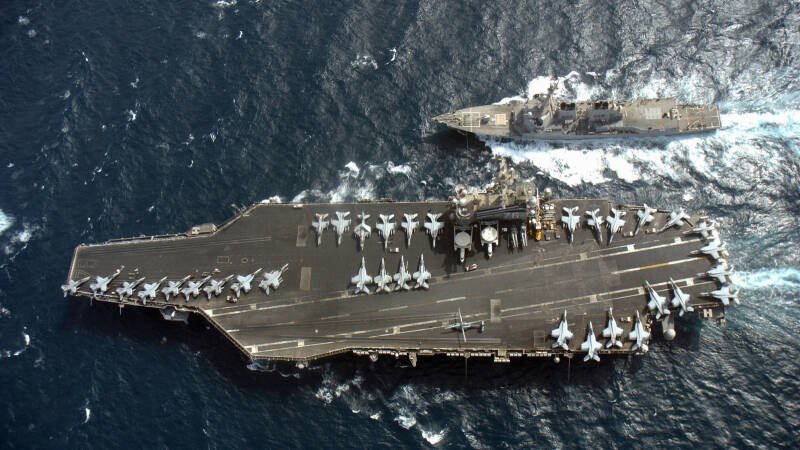



Ever wondered how many people live on a US aircraft carrier? Learn about the crew size, roles, and why it matters in this detailed breakdown.
Aircraft carriers are the flagships of the United States Navy, projecting American power across the globe. These floating cities are not just about the planes they carry; they're also about the thousands of highly trained individuals who operate and maintain them. But how many people actually live and work on one of these massive vessels?
Typically, a U.S. Navy aircraft carrier, like the Nimitz-class or the newer Gerald R. Ford-class, carries a crew of around 5,000 to 6,000 personnel. This includes both sailors and Marines, although the vast majority are sailors.
This massive number is divided into several key functional areas:
It's important to remember that the exact number can fluctuate depending on the specific mission and operational requirements. For example, during a major exercise or deployment, the carrier might have a slightly larger crew than during routine operations.
Understanding the sheer size of an aircraft carrier's crew gives us insight into the complexity and logistical challenges of naval operations. Each person onboard plays a crucial role in maintaining the ship's readiness and effectiveness. It highlights the immense resources and training required to operate these powerful platforms.
Furthermore, knowing the composition of the crew allows for better understanding of the operational capabilities. For instance, a larger air wing translates to increased air power projection capabilities.
In our opinion, the size of an aircraft carrier's crew underscores the significant investment the U.S. makes in its naval power. The intricate coordination required to sustain such a large group of people at sea for extended periods is a testament to the Navy's logistical prowess. This also highlights the economic impact of naval operations. Imagine the amount of food, fuel, and other supplies needed to keep this floating city running!
The inclusion of a Marine detachment, even a small one, adds a layer of versatility to the carrier's capabilities. It allows for rapid response to various situations, from humanitarian aid to combat operations.
As the U.S. Navy continues to modernize its fleet with the Gerald R. Ford-class carriers, we anticipate some changes in crew composition and size due to increased automation and advanced technologies. While the overall number might slightly decrease, the skillsets required will likely become even more specialized.
This could impact training programs, requiring a greater focus on technical expertise and digital literacy. Furthermore, the integration of unmanned aerial vehicles (UAVs) into carrier air wings will further alter the crew dynamics, potentially creating new roles and responsibilities.
In the long term, the future of naval warfare will likely involve a greater reliance on technology and automation. However, the human element will remain critical, requiring highly trained and adaptable sailors and Marines to operate and maintain these complex systems. The number of people on a carrier might shift, but the importance of each individual's contribution will only grow.
























