Glenn Beck: Is Canada No Longer a Free Nation? 20 Brutal Proofs
Glenn Beck argues Canada has abandoned core pillars of freedom, listing 20 examples including suppression of protests, government control of news, and eroding property rights. Is Canada still a free nation?
Glenn Beck: Is Canada No Longer a Free Nation? 20 Brutal Proofs
Glenn Beck Sounds the Alarm: Is Canada Losing its Freedom?
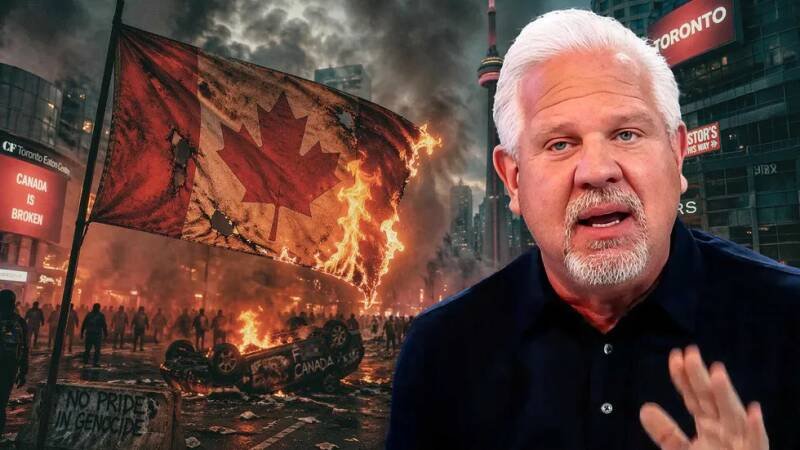
Conservative commentator Glenn Beck has issued a stark warning, claiming Canada is no longer a truly free nation. He argues that various actions by the Canadian government, particularly in recent years, have eroded fundamental freedoms and democratic principles.
Beck bases his assessment on ten essential components of a free nation: rule of law, free and fair elections, protection of individual rights, separation of powers, an independent judiciary, a free press, civilian control of the military, protection of minority rights, economic freedom and property rights, and a culture that values freedom. According to Beck, Canada is failing on many of these fronts.
20 Examples Cited by Glenn Beck
Beck provides 20 specific examples to support his claim, which include:
- Lab Scandal Cover-Up: Allegations of a top-security lab scientist sending dangerous samples to the Wuhan Institute of Virology, and the government's alleged obstruction of investigations.
- Corruption Shielded: Claims that Parliament shut down investigations into significant corruption allegations.
- Rule by Executive Fiat: A hypothetical scenario involving a small elite installing a new prime minister and the suspension of Parliament.
- Foreign Election Interference: Allegations of China interfering in Canadian elections, with no action taken by the government.
- Unequal Justice: Claims that a Liberal MP encouraged a bounty on a Conservative candidate with no repercussions.
- Democracy by Manipulation: Issues with mail-in ballots, incorrect postal codes, and MPs switching parties, allegedly manipulating election outcomes.
- Crushing Peaceful Protests: The invocation of the Emergencies Act against the Freedom Convoy truckers' protest, freezing bank accounts, and subsequent court rulings against the government's actions.
- Government Control of News: Bill C-18, which aimed to force tech companies to pay news outlets for linking to their content.
- State Regulation of Culture and Speech: Bill C-11, which regulates online streaming platforms and imposes Canadian content quotas.
- Ignoring the Public Will: The continuation of the carbon tax despite public opposition.
- Seizure of Private Land: Ontario's Bill 212 granting the government power to fast-track highway projects and seize private land.
- Secret Land Grab: Seizure of farmland in Waterloo under confidential NDAs.
- Politicized Justice: A judge shortening a criminal's sentence to prevent deportation.
- Government Competing Against Citizens: Toronto city council approving government-operated grocery stores that avoid paying the same taxes as private businesses.
- Crushing Local Taxpayers: Forced municipal mergers leading to sudden property tax increases.
- Permission-Based Economy: British Columbia requiring government approval for routine activities.
- Gun Confiscation: The banning of certain firearms and the threat of jail time for those who don't comply with the buyback program.
- Death as Health Care Solution: The expansion of Medical Assistance in Dying (MAID) and its increasing use in Canada.
- Criminalizing Dissent: The "Combating Hate" bill (C-9) and its potential to criminalize religious beliefs and political dissent.
- Exit Tax on Citizens: A proposal for a tax on educated Canadians who choose to emigrate.
Why This News Matters
This news is significant because it raises fundamental questions about the state of democracy and individual liberties in Canada. Whether or not you agree with Glenn Beck's assessment, his claims highlight concerns about government overreach, freedom of speech, and the protection of individual rights. These are crucial issues that deserve serious consideration and public debate.
Our Analysis
In our opinion, while some of Beck's claims may be hyperbolic, they point to genuine concerns about the balance of power between the government and its citizens. The use of the Emergencies Act, the implementation of Bills C-18 and C-11, and the expansion of MAID are all policies that have sparked considerable controversy and raise legitimate questions about the role of government in regulating speech, information, and even end-of-life decisions.
It's important to critically evaluate these claims and examine the evidence presented. Is there a genuine erosion of freedom, or are these policies simply attempts to address complex societal challenges? The answer likely lies somewhere in between.
Future Outlook
This situation could impact Canada's standing on the international stage and its reputation as a champion of democracy and human rights. If these concerns persist, we may see increased political polarization, a decline in public trust in government institutions, and a growing sense of unease among Canadians about the future of their country.
Ultimately, the future of freedom in Canada depends on the willingness of citizens, politicians, and institutions to engage in open and honest dialogue about these challenges and to work together to find solutions that uphold the principles of democracy and individual liberty.